Sakthi Vibrations: Film Screening & Talk with Director Zoe Sherinian
Other
510 Southwest Hall Street,Portland OR 97201
24 May, 2022
Description
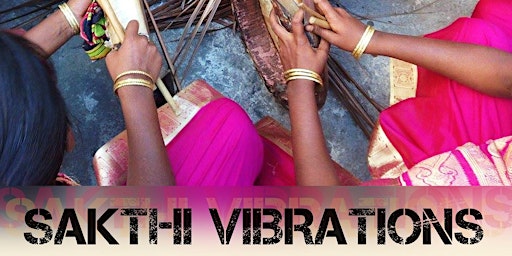
Join PSU International and Global Studies for a screening of the film "Sakthi Vibrations" followed by a talk with director Zoe Sherinian. Doors: 4:45pm Film Screening: 5:00pm Talk with Zoe Sherinian: 6:30pm About the film: The Sakthi Folk Cultural Centre, located in Dindigul, Tamil Nadu, India uses the Tamil folk arts to develop self-esteem and economic skills in young Dalit (outcaste or untouchable) women. This documentary film seeks to reveal and analyze Sakthi’s model for Dalit women’s development that integrates folk arts performance with social analysis, micro-economic sustainability, leadership and community development. The Sakthi Centre reclaims the devalued parai frame drum (associated with pollution and untouchability) to re-humanize and empower these young women through the physical embodiment of confidence in performance and renewed cultural identity in a complex campaign against gender, class and caste subjugation. The film editing experimentally weaves together interviews, performance, and development activities such as tailoring and basket making along with footage shot by the students themselves as they actively define their process of growth and contribute to this participatory documentary. The women narrate the film looking directly into the camera to confront the audience with the reality of their oppressed yet transforming lives. Paralleling the representation of community in their circle dance formations and syncretic rituals, we tell their collective story of transformation from their first day struggling to walk and clap in time, to their first performance for their parents, and their final public festival and academic graduation from high school. This film engages applied ethnomusicology though participatory filmmaking, filmmaking as fieldwork methodology, and the intersectionality of caste, class and gender. Finally, it demonstrates the agency and strategies of Dalit women as they create social justice for themselves through personal, community, and economic development. About the director: Zoe Sherinian is Professor of Ethnomusicology and Division Chair at the University of Oklahoma. She has published the book Tamil Folk Music as Dalit Liberation Theology (Indian Univ. Press 2014), articles on the Dalit parai frame drum in the journal Interpretation (2017), and articles on the indigenization of Christianity in Ethnomusicology (2007), The World of Music (2005), and Women and Music (2005). She has also produced and directed two documentary films: This is A Music: Reclaiming an Untouchable Drum (2011), on the changing status of Dalit (outcaste) drummers in India, and Sakthi Vibrations (2018), on the use of Tamil folk arts to develop self-esteem in young Dalit women at the Sakthi Folk Cultural Centre. She is presently writing a book entitled Drumming Our Liberation: The Spiritual, Cultural, and Sonic Power of the Parai Drum. She is also an active musician who performs and conducts trainings in the parai drum. She has extensively studied the mrdangam, the classical drum of South Indian Karnatak music, and performs on the jazz drumset. She has also performed with the Balinese Gamelan, Sekar Jaya, and several university based steel drum and African drumming ensembles. In 2009, Sherinian began the first parai (Indian folk) drumming ensemble in the U.S. at the University of Oklahoma and teaches drumset for the Girls Rock and Roll camp of Oklahoma City. Sherinian’s research engages the intersectional relationship between caste, class, gender and music in South Asia as well as the historical and contemporary use of music to indigenize Christian ritual and theology. Her strengths include theoretical attention to the intersectionality of race, class, gender, caste and religion; a South Asia area studies concentration with focus on art, religion and politics; a secondary focus in African American music; ethnomusicological fieldwork praxis based in applied ethnomusicology, phenomenology, and participatory documentary filmmaking; as well as historically grounded research on cross-cultural religious contact and the resulting agency of oppressed people in the production of music. She also has strengths in gender and queer theory, and applies feminist analysis from global and anthropological perspectives to most of her work. Sponsored by PSU Institute for Asian Studies and department of International & Global Studies.
Discussion
By posting you agree to the Terms and Privacy Policy.