Age, Disease & Street Redesign Leads To Tree Removal In Princeton
News
Princeton NJ
06 April, 2022
1:21 PM
Description
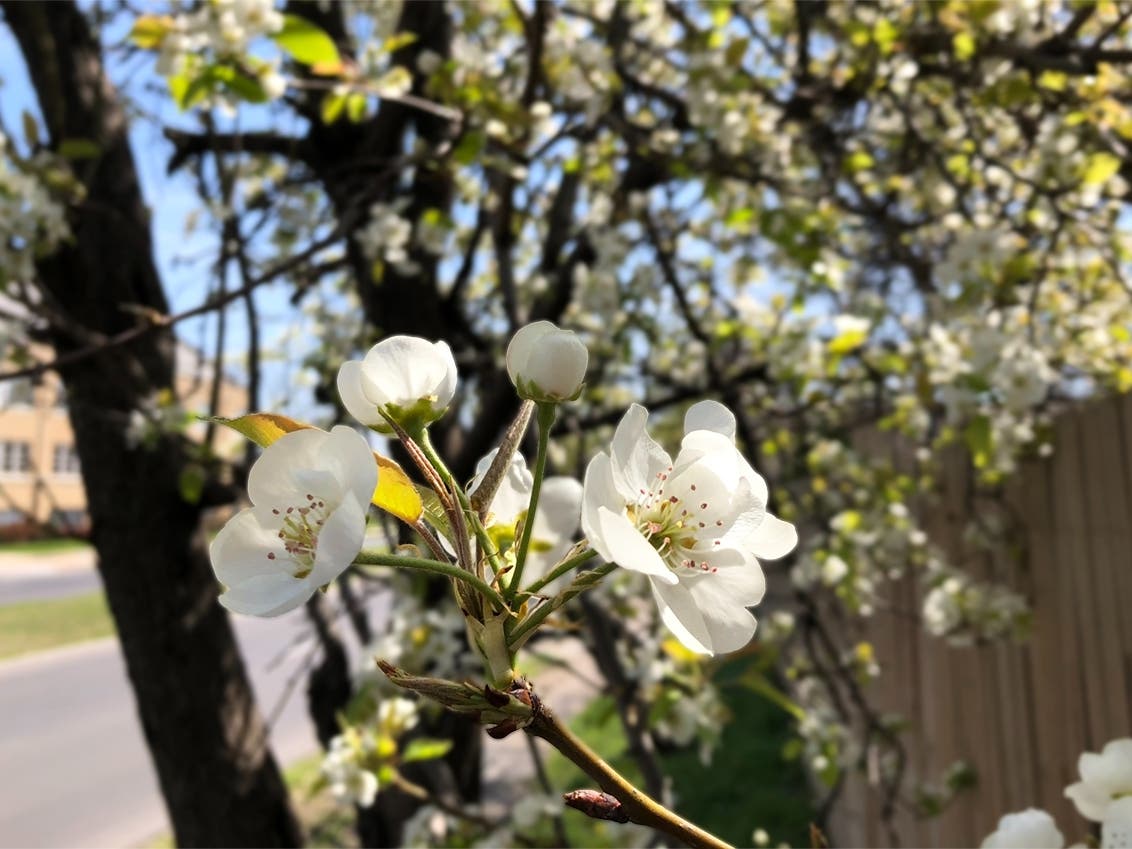
PRINCETON, NJ — The blooming pear trees from Nassau to Spring Street were a sight to behold during spring in Princeton. The trees in front of Princeton Theological Seminary bathed the landscape in beauty. But those trees recently faced the ax — some as part of Witherspoon Street redesign and others due to disease and decay. Many locals were surprised at the tree removal, with one resident aiming their anger at the Municipality arborist, as Mayor Mark Freda noted during the last Council meeting. But the decision to remove the trees was not made overnight, a lot of discussions went into it. The Bradford pear trees on Witherspoon Street were removed as part of the overall Witherspoon Street Improvements Project. "The sidewalks are being widened an additional eight feet and the trees would have been in the pedestrian thoroughfare," Municipal Arborist Taylor Sapudar said. "Replacement trees will be planted between the pedestrian way and the roadway and will eventually provide a canopy framing the roadway." Although the trees were greatly admired in Princeton, most of them were at the end of their life, Sapudar said. The Bradford Pear is also an "undesirable species" as it is an invasive tree that is prone to splitting when planted in the urban environment. "They are not a recommended tree and are even banned in some states. The trees that will replace them are more suited to the environment and have been approved by the Shade Tree Commission," Sapudar said. The Shade Tree Commission supported the replacement of the Bradford Pear with diverse shade trees. The commission said that urban streets are typically inhospitable environments for trees and the reconstruction of Witherspoon Street is a "once in a generation opportunity" to rebuild the tree planting locations. "The renewed planting will enhance the Witherspoon Street environment, making it more inviting for shopping and dining and will enrich the neighborhood's biodiversity," the Commission said in a statement that was read by Freda during the last Council meeting. The trees at Princeton Theological Seminary had to be axed due to deterioration caused by age and disease, Sapudar said. The pin oak which was removed appeared to have bacterial leaf scorch, an incurable disease often found in the red oak family. "The crown of the tree had a significant amount of dieback overhanging the right of way. An adjacent pin oak was removed a few years ago for the same reason," Sapudar said. The sugar maples that were removed had a significant amount of decay and dieback, and the horse chestnut was completely dead, the arborist said. These trees also proved to be a safety hazard for the public. "We witnessed that one of the maples was entirely hollow. When trees reach this stage in their life or are so damaged by disease, they become a safety hazard. As much as we abhor having them removed, they had to be to protect the public, both those traveling by and those who may be simply admiring them in place," Sapudar said. Years ago, the Seminary had a consulting arborist conduct an inventory and assessment of the trees. The recent trees removed were recommended removals. "I agreed with the hired consulting arborist's assessment and permitted the removal," Sapudar said. The Seminary will be replacing the trees. If you want to plant a tree in Princeton, free seedlings will soon be available in the area. A seedling giveaway will take place at noon on April 23 at Witherspoon Street during the April ARTS Event. Click here for all seedling-pickup locations and instructions on planting them. Thank you for reading. Have a correction or news tip? Email [email protected] Get breaking news alerts on your phone with our app. Download here. Sign up to get Patch emails so you don't miss out on local and statewide news
Discussion
By posting you agree to the Terms and Privacy Policy.