I-95 Snowstorm Shutdown Investigation Notes VA's Response Problems
News
Falls Church VA
04 April, 2022
8:50 AM
Description
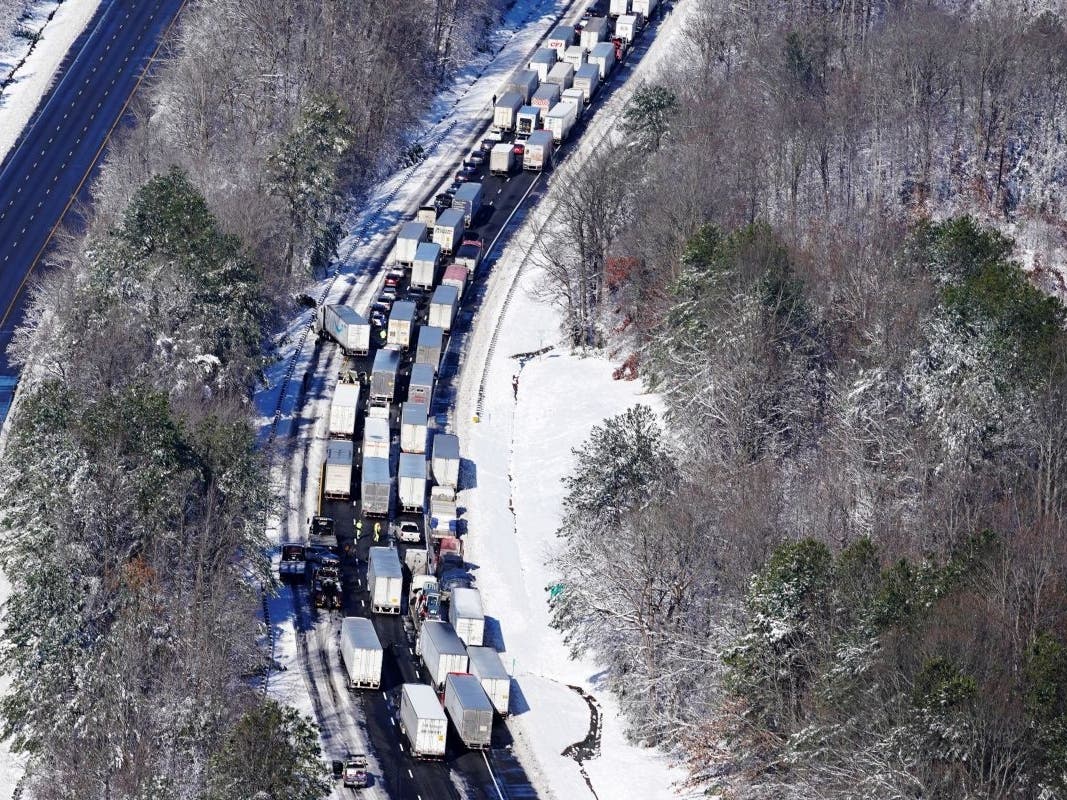
VIRGINIA — A combination of heavy traffic, high snowfall rates, and downed trees and electric power lines, along with a lack of tow trucks and wreckers, led to hundreds of drivers getting trapped on Interstate 95 in Virginia for more than 24 hours on Jan. 3-4, according to a new report requested by state agencies. Warm weather and rain before the snow started to fall on Jan. 3 also prevented pretreatment of roads, Arlington-based independent consulting firm CNA said in the report, released Friday. The investigators also concluded the warm weather may have distracted the public from warnings issued about the snowstorm and calls to avoid unnecessary travel. Once traffic started getting worse, "a loss of situational awareness about the extent of the queue building on I-95" added to the state's inability to tow away trucks and decide on the best ways to divert traffic on the interstate, according to the report. The report was the result of a three-month investigation into one of Virginia's worst travel backups since a snowstorm on Jan. 26, 2011, created a nightmare evening rush hour in Northern Virginia when drivers abandoned their cars and slept in local hotels. CNA gathered information through interviews with staff and leadership of the Virginia Department of Emergency Management, the Virginia Department of Transportation and the Virginia State Police. With greater awareness of what was happening on I-95 and across the state, VDOT and the Virginia State Police could have taken action sooner, such as blocking ramps leading onto I-95, calling in additional towing resources, sending snowplows against traffic, and pulling cars to nearby commuter lots to reduce towing cycle times, the report said. Virginia Commissioner of Highways Stephen Brich welcomed the report for highlighting key areas for state agencies to improve their winter weather operations. "Our on-road messaging, snow-clearing resource staging and partner engagement are all areas in which we are exploring new approaches to improve our response," Brich said in a statement. The winter storm hit Virginia after the New Year's Day holiday weekend, which featured rain and near-record-high temperatures in some areas of the state. Early Sunday, Jan. 2, though, the National Weather Service issued a forecast that indicated the rain would change to snow on Monday, Jan. 3, with moderate snowfall amounts expected across the state. Early on Jan. 3, the NWS updated its forecast and issued a winter storm warning for the entire region. Forecasters called for 5 to 10 inches of snow for most of the D.C. area and south, with snow heavy at times. The NWS warned about the possibility of a snowfall rate of 1.5 to 3 inches per hour in some areas. Long before the massive traffic backup on I-95, jurisdictions across the state had closed down schools and government offices for the day. READ ALSO: I-95 Shutdown: All Drivers Escape Road After 20+ Hours, Plows Out "There is no doubt that VDOT and VSP communicated to the public before and during the incident, and VDEM amplified their messages throughout," the report said. "However, Virginia agencies will likely need to adjust to the public's new expectations for receiving and interpreting information." For example, the issuance of a Wireless Emergency Alert issued on Tuesday, Jan. 4, was generally considered to be a valuable tool for providing direct instructions and information to motorists stuck on I-95, the report said. At 9:14 a.m. on Jan. 4, at the request of VDOT, the Virginia Department of Emergency Management sent the Wireless Emergency Alert directed to motorists stuck on I-95. The alert read: "I-95 Drivers: State & locals coming ASAP with supplies & to move you." Public 'Bears Some Responsibility' The after-action report also concluded that "the public bears some responsibility to stay informed about road conditions and traffic during snowstorms, and should implement an informed decision-making process before choosing to take to the roadways." "If the public does decide to attempt a drive during winter weather, they should be prepared (e.g., packing food, water, and blankets) in case they get stuck for an extended period," the report said. U.S. Sen. Tim Kaine (D-VA), one of the drivers caught in the 50-mile traffic jam on I-95, left his home in Richmond shortly after 1 p.m. on Jan. 3, on a commute to Washington, D.C. The commute typically takes between two and three hours, depending on traffic on the interstate. Kaine was stuck on the interstate overnight and finally arrived at his office on Capitol Hill shortly before 4 p.m. on Jan. 4, more than 26 hours later. On Jan. 4, after Kaine and hundreds of other motorists had spent the night stuck in their cars on I-95, leadership from VDOT and the Virginia State Police conducted a helicopter flyover to see the scope of the backup. "They gained perspective on the extent of the backup that educated tactical approaches to the closure, snow removal, and vehicle removal operation," the report said. "Efforts to clear the highway continued throughout the afternoon. Calls from stranded drivers to the district office tapered off and ceased altogether at approximately 3:30 p.m. as the last trapped motorists were evacuated from I-95. The highway reopened at 7:30 p.m." More traffic may have been on the interstate on Jan. 3 as the public resorted to driving due to flight cancellations after the New Year's Day weekend because of the COVID-19 pandemic, according to the report. "Traffic volumes on I-95 around Fredericksburg on January 2 into early January 3 (before the snow) were on average 65 percent higher than on the same days in 2019," the report said. The report also found that the number of tractor-trailers on Virginia interstates had increased since 2019, due to supply-chain issues and changes in regular commuter traffic, caused by the pandemic. I-95 in the Fredericksburg area also is well-known as a "traffic hotspot," with its "steep, long hills (climbing northbound) that frequently slow down trucks," according to the report. Also, multiple work zone barriers block shoulders in the area, which affected snow removal by reducing the shoulder areas where snow could otherwise be pushed, the report said. According to the report, the storm caused 833 crashes and 819 disabled vehicles in Virginia. Contractors who provide snow removal for VDOT had fewer staff members working because of the surging COVID-19 omicron variant. The report also found that some VDOT districts experienced shortages of field staff because of the pandemic. "Being stranded on a frozen highway for dozens of hours is dangerous, and we should do everything we can to avoid another crisis like the one [that] hundreds of Virginians and I experienced on I-95," Kaine said in a statement. "I'm glad to see that the Virginia Department of Transportation has conducted a thorough analysis of the jam, so we can improve communication and be better prepared in the future."
Discussion
By posting you agree to the Terms and Privacy Policy.