US, Canada NRI's, Capt-Modi,solve Farmers Protest-COVID
Classifieds
Fremont CA
03 December, 2020
1:02 PM
Description
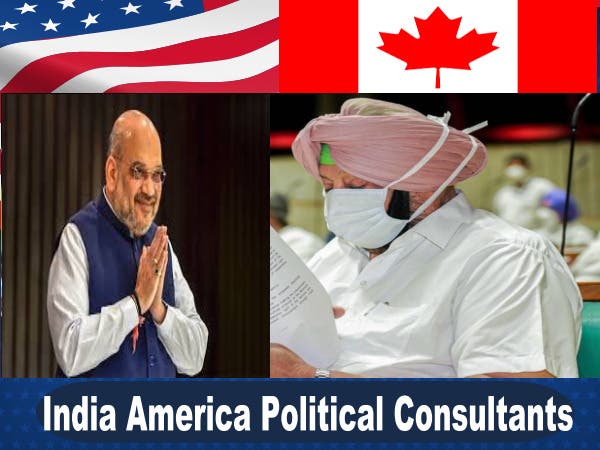
Some of India’s farmers are among the country’s poorest people, but government policies have long protected them from the ravages of open market prices.That is changing. A set of three laws passed in September aims to deregulate India’s enormous agriculture sector. Prime Minister Narendra Modi has said they will “liberate” farmers from the tyranny of middlemen. India America Political Consultants, hold both Central Govt, headed by Prime Minister Modi and Punjab Govt.,headed by Capt Amarinder Singh, equal partners in these "FARM LAWS 2020" and "thay have an obligation to solve what they have proposed", said Vikram Bajwa of IAPC-USA. Awtar Gill Farmer from Fresno advised Govt.of India, to follow US System of Farm Laws, whereas Dave Sidhoo of Vancouver, Canada advised Capt.Amarinder Singh to lead the Farmers laws, adopted in Canada, suited for Punjab in his meeting with Amit Shah, Home Minister of India and AGRICULTURE Minister Tomar. Due to COVID-19 trajectory rise in cases, Medical Professionals fear #FarmerProtest can lead to be Super-Spreader in Haryana and Punjab-IAPC But many farmers fear that they stand to lose more than they could gain from the new regulations and that the main beneficiaries will be agricultural corporations with gargantuan financial firepower. As a result, the farmers have taken to the streets in the biggest such protests in years. The demonstrations ramped up last week when several thousand protesters from the northern states of Punjab and Haryana set out to converge on the capital, New Delhi. Police blocked them at the city’s borders, denying them permission to gather in a place of their choice. So what do India’s new farm laws do? Firstly, they make it easier for farmers to bypass government-regulated markets (known locally as mandis) and sell produce directly to private buyers. They can now enter into contracts with private companies, a practice known in India as contract farming, and sell across state borders. The new regulations also allow traders to stockpile food. This is a shift away from prohibitions against hoarding, which could make it easier for traders to take advantage of rising prices, such as during a pandemic. Such practices were criminal offences under the old rules. Why is any of this a problem? Farmers have some genuine concerns. A big one is that the new rules remove many of their safeguards. More than 86 percent of India’s cultivated farmland is controlled by smallholder farmers who own less than two hectares (five acres) of land each. They fear that they just do not have enough bargaining power to get the kinds of prices they need for a decent standard of living when they negotiate to sell their produce to larger companies. “It is preposterous to believe that farmers who have small land holdings will have any bargaining power over private players.” Can’t they take such disputes to court? One of the new legal provisions says that to resolve disputes, farmers can seek out a so-called conciliation board, district-level administrative officers or an appellate authority. In other words, these cases will not go to a regular court. But you said farmers can enter into contracts with buyers. Surely this will give them legal protection? The new laws also do not make written contracts mandatory. So in the case of any violation of their terms, it can be very hard for a farmer to prove that he or she has been aggrieved, giving them little recourse. It also does not help that, in general, there’s a bit of a bad odour around doing business with large companies.Farmers have seen the costs of things like fertilisers and seeds shoot up over the years as those farming inputs are predominantly sold by the private sector.
Discussion
By posting you agree to the Terms and Privacy Policy.