Heal The Bay Annual Beach Report Card Isn't The Whole Picture
News
Laguna Beach CA
09 October, 2021
6:02 PM
Description
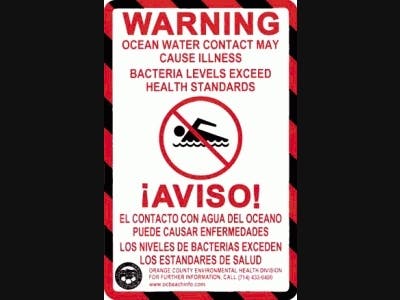
Heal The Bay's Annual Beach Report Card Isn't The Whole Picture Heal The Bay's (HTB) Annual Beach Report Card is misleading. Released at the onset of summer each year, locals have now spent another entire summer of 2021 recreating in questionably safe coastal waters. Barring independent online investigation, the trusting public is unaware of just exactly what these grades are actually based upon. "We at Heal the Bay believe the public has the right to know the water quality at their favorite beaches. We are proud to provide West Coast residents and visitors with this information in an easy-to-understand format. We hope beachgoers will use this information to make the decisions necessary to protect their health." https://healthebay.org/beachre... Trusting a prestigious sounding NGO, the public gets a false sense of security. HTB doesn't actually perform the water quality sampling, they just capture and organize results acquired from the regional public health and wastewater agencies databases respectively. What's tested for, grab sampled at our beaches, in knee deep, diluted mixing zone ocean waters are the 3 agreed upon pathogenic, fecal indicator bacteria markers that Assembly Bill 411 mandated in 1997. They can cause gastrointestinal, plus eye, ear, nose and throat illnesses: Enterococcus, fecal coliform and escherichia coliform. https://www.waterboards.ca.gov... The compliance and notification guidelines (SEE 3 SIGNS ABOVE) it mandated is like worrying about a scratch on your forehead when you've just been hit by a train. If this were triaged in a hospital, your doctor would say: "Nurse? Forget his head cut, he's hemorrhaging internally." There's nothing cutting edge or futuristic about detection and emerging technological monitoring for beastly toxins, and reports simply lack transparency and promulgation, the political disclosure will. Science has progressed to the point where it could function as an early warning system: IF advanced testing were performed. Like that Capital One commercial, the public should asking themselves "What's in MY water?" AB 411 only required the minimum, that public health officials test for these 3 bacterial contaminants, then post notification signage if exceeded. True, they can, if found in certain high concentrations and ratios to each other, signal possible presence of human or animal waste. Yes, if sampling and ongoing monitoring reveals levels are deemed unsafe, then waters of the state must remain posted with warnings until such a time as subsequent sampling allows safe returned usage. No one stops anybody from going in though, mind you. Personally, I've never seen or heard of anyone being physically denied access, immersion is volitional, up to the public judgment individually. As often happens, big surf around major storm events equals more contaminant migration to our tidal waters. AB 411 seemed a game changer in 1997, today it's seen as only a small historical piece of the larger water quality impairment puzzle. Using and circulating it as THE metric, the measuring tape for general public health and safety is absurd. Peddling these HTB Beach Report Card compliance "safe harbor" parameters as clean bills of health or hazard-free zones eludes me. It's outrageous, as if a complex toxic soup problem has been solved when it hasn't. Think "Don't Test, Don't Tell," the more hazardous to human health of the ocean-discharged contaminants are NOT the 3 bacteria in the Report Card. Most freshwater-friendly microbes like these 3 markers in fact dissipate and die off in great numbers once they hit high salinity, adverse ionic (ocean) waters and sunlight (natural UV). Toxicity testing for the gamut of teratogenic (birth defects), mutagenic (mutant, impaired organisms) and carcinogenic constituents in such surface runoff flows would be a better hazardous substance indicator. And no, in this case, what doesn't kill you does NOT make you stronger. This goes for any life form, not just humans. Considering that many of the outfall discharge areas and mixing zones graded A+ by HTB are drainages from the dreaded federal 303 d Impaired Waterbody List (303 d IBL), then HTB's Report Card unravels pretty quickly. It's fatally flawed in an inherently biased and myopic way because the tests themselves aren't really indicative of the more dangerous constituents of water-borne pollutants. NOTE: The 303 d IBL is reviewed and then updated every few years. Nearly every segment of every watercourse in the OC is in Category 5, the impaired equivalent of the ICU at a hospital, exhibiting multiple toxic substances, i.e., metals, minerals, bacteria et al whose concentrated pollutant loading levels pose a threat to life forms. Look up where you recreate, anywhere in California (lake, creek, river, ocean), then decide for yourselves, the list includes your favorite beach, creek, river or lake: https://www.waterboards.ca.gov... Coastal community public officials and commerce-related industry especially, needing or protecting vibrant, blissfully ignorant tourism in a stagnant economy, along with their sycophantic, ingratiating staffs and PR flacks will cite and "huzza" the Report Card: "Mission accomplished! Everyone can go back into the water, come visit us and know you're safe," right? More like "When Jaws Met Apocalypse Now." A UCI study published in 2004, widely publicized then buried, revealed Hepatitis A markers (and a lot of other hazardous pathogens) in ≈ 50% of creeks and rivers in Southern California, from Santa Barbara down to San Diego. "Detection of pathogenic viruses in southern California urban rivers" by Environmental Health, Science and Policy, University of California, Irvine, CA is most illuminating: "Conclusions: This study provides the first direct evidence that human viruses are prevalent in southern California urban rivers." OC residents should peruse this study's database, it'll open your eyes wide in shock. Go to TABLE 3 on Page 22: You'll discover that Newport Bay, San Diego Creek (Irvine, Tustin and Costa Mesa drainages) Aliso and San Juan Creek watersheds respectively had Hep A and other viral markers, discharging runoff to receiving waters that should be fishable and swimmable according to the federal Clean Water Act: https://escholarship.org/conte... A 2015 eDNA study by the Southern California Coastal Water Research Project (SCCWRP) seeking human waste markers at Doheny State Beach in Dana Point, along with its predecessor from UCI, suggested that compromised wastewater systems within the park and immediately upstream, e.g., older residences or businesses, were the likely culprits. Contaminants migrate great distances via groundwater tables, for those alarmed by the human DNA markers divulged recently at San Clemente Pier, they could be there due to similar hydraulic distribution processes: https://ftp.sccwrp.org/pub/dow... Swimming or wading anywhere near a storm drain outfall pipe, creek or river mouth in Southern California is an IQ test. Oh yes, they have these pitifully small warning signs, but no one is enjoined, no one is forbidden from wading around in the land-warmed urban runoff or swimming in it. Getting a sore throat might be the least of your worries. AB 411 monitoring has given a false sense of security to unsuspecting recreational water users that believe aggregators like HTB as gospel truth, and in turn the mainstream media, albeit ignorantly, complicitous. Those who circulate and tout the Report Card as infallible are falling pitifully short regarding public awareness and education.
Discussion
By posting you agree to the Terms and Privacy Policy.