Texas Voting Bill Adds More Restrictions To Mail-In Voting
News
Austin TX
07 September, 2021
1:12 PM
Description
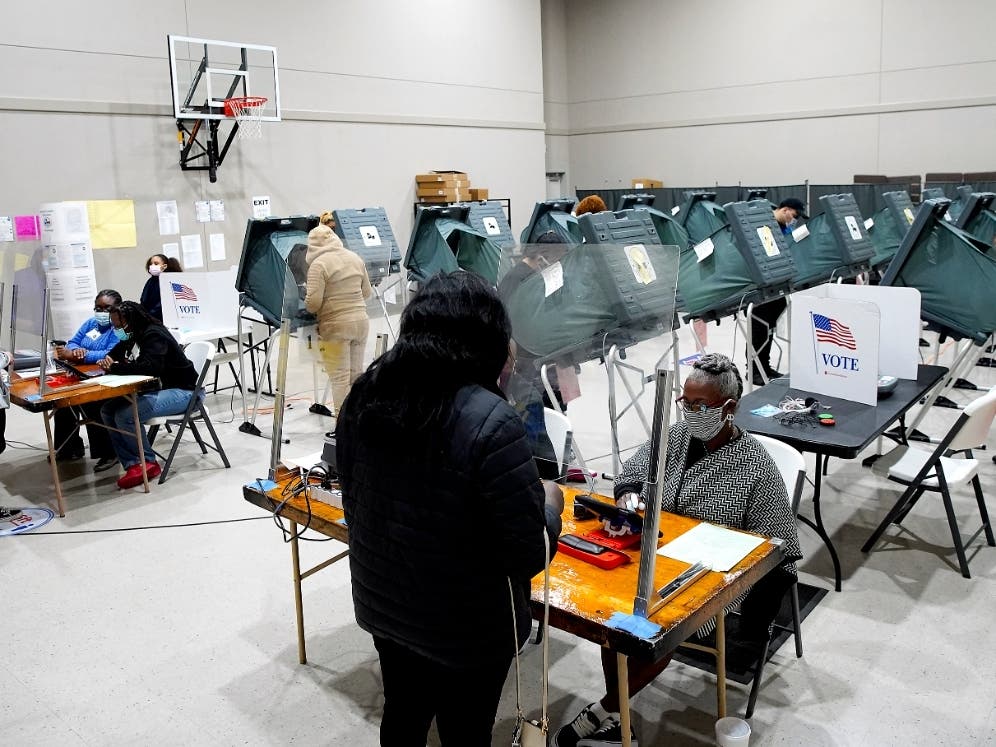
TEXAS — Texas Gov. Greg Abbott has signed into law a new bill that imposes new hurdles on mail-in ballots and empowers partisan poll watchers. Abbott signed into law Senate Bill 1, which he calls "Texas' election integrity bill," on Tuesday in Tyler. The governor signed the bill surrounded by Lt. Gov. Dan Patrick and the bill's lead authors Sen. Bryan Hughes, R-Mineola, and Rep. Andrew Murr, R-Junction, as well as other Republican lawmakers. "Proud to sign Senate Bill 1 into law, which will uphold the integrity of our elections in Texas," Abbott said in a tweet on Tuesday. "This law will make it easier to vote and harder to cheat in the Lone Star State." Live in Austin? Click here to subscribe to our free breaking news alerts delivered to your inbox and mobile devices. Follow us on Facebook and Twitter, and download our free mobile app on Android or iPhone. According to SB1, the new law will ban 24-hour and drive-thru voting and restricts the hours counties can offer early voting to between 6 a.m. and 10 p.m. The bill also blocks counties from sending unsolicited mail-in voting applications — even to those who are over 65-years-old and therefore qualify automatically to vote by mail. SB1 will place new rules around mail-in voting, increases protections for partisan poll watchers and sets new limits on those who help voters, including those with disabilities, to cast their ballots. The Texas voting law is set to take effect three months after the special legislative session, in time for the 2022 primary elections. The restrictive voting measure adds Texas to the list of Republican-controlled states that have enacted new voting restrictions following the 2020 election. In this June 8, 2021, file photo, Texas Gov. Greg Abbott speaks at a news conference in Austin, Texas. Opponents of a sweeping Republican elections overhaul in Texas sued Gov. Greg Abbott on Friday, Sept. 3, 2021 going to court even before he had signed into law changes that would further tighten the state's already strict voting rules. (AP Photo/Eric Gay, File) The same day Abbott signed the bill into law, three more lawsuits were filed against Texas stating the SB1 is unlawful. On Friday, the Texas Civil Rights Project, an Austin nonprofit that advocates for voter rights, racial and economic justice and criminal justice reform, filed its own lawsuit against the state citing the law violates the Voting Rights Act, Americans with Disabilities Act and the U.S. Constitution. "This illegal bill has no discernible purpose other than to make it harder for certain Texans to vote," the nonprofit said in a tweet on Friday. On Tuesday, the NAACP Legal Defense and Education Fund, Inc., Reed Smith LLP, and The Arc filed a federal lawsuit on behalf of the Houston Area Urban League, Houston Justice, Delta Sigma Theta Sorority, Incorporated, and The Arc of Texas challenging SB1. The lawsuit, which was filed in the United States District Court for the Southern District of Texas, argues that Sb1 violates the 1st, 14th and 15th Amendments and Section 2 of the Voting Rights Act by "intentionally targeting and burdening methods and means of voting used by voters of color." The Plaintiffs also claim that the law violates the Americans with Disabilities Act and Section 504 of the Rehabilitation Act of 1973 and Section 208 of the Voting Rights Act by imposing voting barriers that will discriminate against voters with disabilities and deny people with disabilities full and equal opportunities to participate in the state's voting programs. "The law at its core is anti-democratic and clearly designed to suppress the vote," said Tina Kingshill, Coordinating Director of Houston Justice. "It will further hinder voting rights of low-income, pre-trial defendants of color unable to post bail who comprise over 70 percent of local and county jail populations. "By prohibiting the expenditure of public funds to facilitate third-party distribution of applications to vote by mail, the law burdens non-profit voter outreach organizations with funding the printing costs of the applications. Many organizations will not have the funds for printing, so essentially the right to request and cast a ballot while incarcerated is taken away." The League of United Latin American Citizens also took federal court action on Tuesday following SB1's passing. LULAC filed the lawsuit in the Western District of Texas' Austin Division urging declaratory and injunctive relief against Texas elections officials because "the new voting restrictions violate the 1st and 14th Amendments and will have a severe and disproportionate impact on Hispanics, blacks, and other communities of color." "LULAC strongly opposes this attack on our voting rights and freedoms because they have one and only one purpose; to dilute our voice at the ballot box and continue to stop electoral change in Texas," said Domingo Garcia, LULAC National President. "Texas voters deserve fair, open, and transparent elections, not a process rigged to deny our communities whose numbers are growing, the right to vote." In their filing, the plaintiffs state, "The Legislature enacted SB 1 not to preserve election integrity or combat election fraud, but rather to stem the growing tide of minority voter participation by weaponizing the false, repeatedly debunked accusations of widespread voter fraud advanced by supporters of former President Donald Trump during the 2020 presidential election." For 38 consecutive days, Democrats gridlocked the state Capitol after more than 50 fled to Washington, D.C., in July to deny Republicans a quorum, which is required to conduct the state's business, according to the The Associated Press. After most of the state legislators returned less than two weeks ago to end the impasse, GOP leaders made quick work of pushing the bill through both chambers on Tuesday. Abbott immediately signed the bill into law. The Texas bill, like others proposed this year, creates or expands several criminal violations involving elections, some of which are broadly defined and could ensnare voters or those who help them, AP reports. Republicans contend these measures are necessary to prevent fraud or improper influence on voters. Democrats note, accurately, that voter fraud is exceedingly rare. AP reports the state's Republican attorney general dedicated millions of dollars to voter fraud investigations since last year but has only turned up a handful of cases in a state where more than 11 million people voted in November. RELATED COVERAGE: Feds To Protect Abortion Seekers In Texas: Department Of Justice In 5-4 Vote, Supreme Court Leaves Texas Abortion Law In Place More Texas Students Tested Positive For COVID-19 The Week Of Aug. 16 Than At Any Time Last School Year
Discussion
By posting you agree to the Terms and Privacy Policy.