TBG Technologies Talks Email Security
News
Milwaukee WI
07 September, 2021
5:37 PM
Description
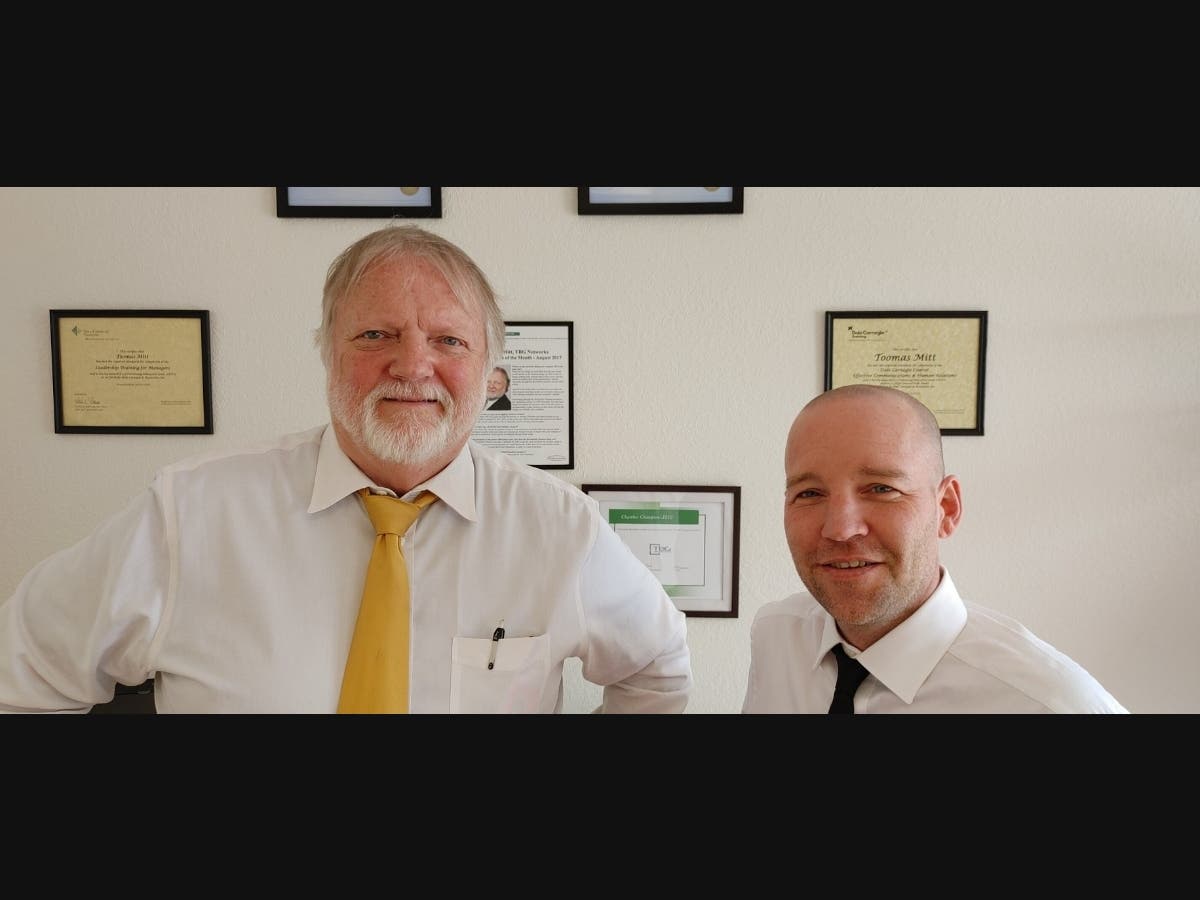
Our names are Jake Polzin, President and Toomas Mitt, Founder of TBG Technologies, an IT support company since 2004. The reason TBG Technologies exists is that we believe small companies are ignored. We are talking about the really small businesses. Those with ten or fewer employees usually get the short end of the stick when it comes to technology support. They have the same goals as big corporations. They have the same technology issues. But they have a tough time getting good, reliable help. Email has come a long way since the first message was sent between two computers back in 1971. The number of emails sent since then has grown incredibly. Estimates are the about 100 billion (yes, billion) emails were sent every day in 2013. And that was over 7 years ago. I guarantee it has gone up a lot since then. Obviously, people have come to reply on email to the point where it has largely replaced other forms of communication. When was the last time you wrote a letter to a friend? If you are under 30, it is possible you have never done that. How about faxes? Emails have quickly replaced the fax machines in almost all offices. Email is quick, convenient, and almost fun to use. In business, email is the standard form of communication. Email has become so easy to use that we forget that it is not a private medium. In the past when you wrote a letter, you had a reasonable expectation that the only person to read it was the person who received it. Not true with email. When you send an email, it passes through an unknown number of computers before it is received and at any point along that trail, your email could be stored, saved, and later read by someone. And even if it gets to your intended recipient untouched, once it is on that person's computer it is open to anyone who might have access. Do you have a snoopy person in your office or home? They could read your emails. Did you just fire someone? They might be able to get your messages. Did you send someone your password in an email message? It is important that you keep this in mind when sending an email. Here are a few things to do whenever you create an email to help prevent unwanted intrusions: Never send an email that includes your login and password to any website. Sounds like common sense, right? You'd be surprised to know that a large number of people do just that. When sending a message to multiple people, put their addresses in the "Bcc:" field. "Bcc:" stands for "Blind Carbon Copy" (if you don't know what a carbon copy is, look it up). If you use the "CC:" field, everyone who gets the message also gets everyone else's email address. You may not want your email address shared with people you don't know. And if any one of those recipients gets a virus, all the emails in that message are now capable of being attacked. If you regularly send documents that include confidential or potentially sensitive information, use a method of encryption on that document. At the very least, save the document with a password (Word, Excel, and just about every other program has that capability) and then give the recipient the password (don't send it by email!). That way, only the person with the password will be able to open it. If the document you are attaching is extremely sensitive, don't attach it. Use a third-party storage system (like DropBox or OneDrive) to save the document and then send a link to the document instead. Email use is only going to increase which makes them a juicy target for hackers, corporate spies, and digital vandals. Don't make yourself and others in your email address book bigger targets! Jake Polzin is the President and Toomas Mitt is the Founder of TBG Technologies, located at 11300 W. Greenfield Avenue, West Allis, Wis. 53214. Tom can be reached at [email protected] and Jake can be reached at [email protected]. www.tbgtechnologies.com We Make Technology Behave.
Discussion
By posting you agree to the Terms and Privacy Policy.