Review: 'The Day the World Stops Shopping'
News
Palo Alto CA
19 August, 2021
1:16 PM
Description
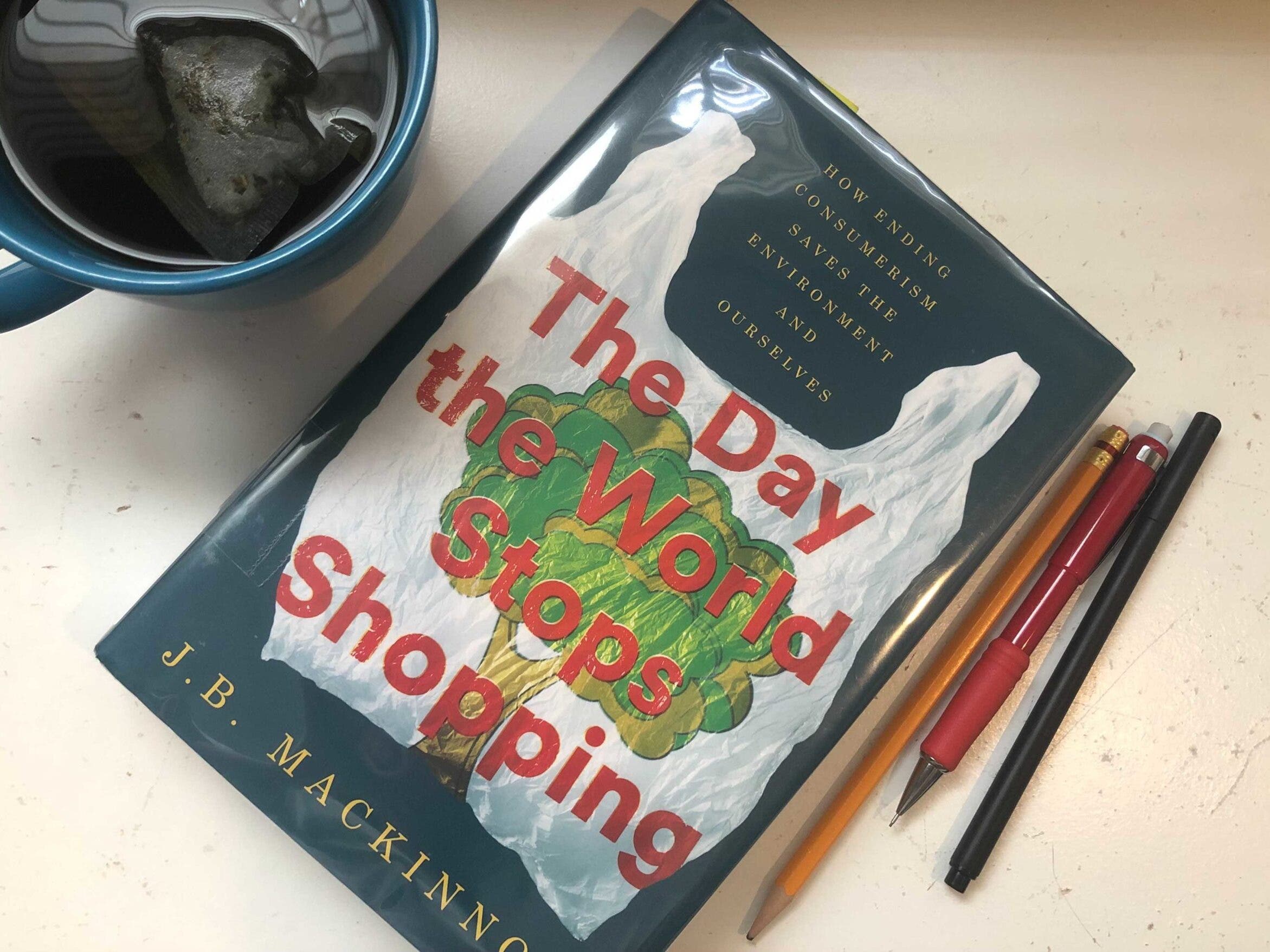
By Iliana Garner, The Stanford Daily August 18, 2021 What if every human on Earth stopped shopping? How would the global economy adapt? How would we adjust? J.B. MacKinnon, an independent award-winning journalist, seeks to answer these questions in his book "The Day The World Stops Shopping," released on May 18. MacKinnon's investigative journalism piece is both informative and well-sourced, exploring the implications of a creative solution to an array of pressing issues — climate change, water depletion and deforestation — caused in part by overconsumption. Our lives are ruled by consumerism, argues MacKinnon; we spend money on commodities like the trendiest clothes, newest tech and our daily Starbucks. Items that we once saw as luxuries, like air conditioning, have become essential to our everyday lives. MacKinnon says many assume that in order to save our Earth from imminent environmental threats, we must switch to greener product alternatives. But maybe, he writes, the solution is to stop buying products entirely — or at least less than we do now. "Nothing we have done to green our consumer appetite has been able to keep pace with how quickly that appetite is growing, to the point that the unwavering dedication to greening has become particular if not absurd," he writes. "If we wish to lessen the harms caused by consumption, why not consider… consuming less?" MacKinnon draws in a wide reader base by using a simple yet informative tone, and he either avoids using or explains scientific jargon. The book is divided into four sections: first days, collapse, adaptation and transformation. These sections provide a framework for sorting MacKinnon's one-off stories, each only a few pages in length. The stories are designed to showcase how different people's and companies' experiences would be affected if the world stopped consuming. These stories are written with different perspectives in mind — light pollution, fast fashion and more. While the book rapidly jumps between these chapters, it is easy for readers to savor each story as its own piece of journalism. The book thrives on MacKinnon's excellent sourcing, which includes both scientific evidence and interviews. For example, he starts the book with observations from the Kalahari Desert of Namibia, located in southwest Africa, and he recounts interviews he collected from a nearby tribe on their simplistic way of living. Through this particular story, MacKinnon seeks to showcase the possibility that our society can revert to simplistic living. Besides this source, he cites data from United Nations scientists, other environmentalist writers, company executives and economists. The range of perspectives included in his book allows readers to see all sides of the topic. Additionally, MacKinnon looks at certain issues through the lens of the pandemic — drawing upon circumstances to which many readers can relate. During the start of the pandemic, people almost "stopped shopping." Hesitant to leave their homes, they relied on what they already had. Therefore, he describes how each story played out during the beginning of the pandemic, if applicable, to bring some reality into his hypothetical situation: everyone in the world stops shopping. Before reading this book, I was not familiar with the impacts consumerism can have on the environment. By the end, I realized that consumerism negatively affects our environment, and how by reducing our collective consumption by even a third, we can work towards solving many of the environmental issues of our time. It is not enough, MacKinnon concedes, that an individual or a few change their shopping habits. In order to create change, the human race must reduce the amount we collectively consume. But the book doesn't explain how we can reduce our collective consumption. The beauty of "The Day the World Stops Shopping" is that MacKinnon instead prompts the reader to seek out other resources, allowing them to conduct further research and take action as they see fit. The Stanford Daily is the independent, student-run newspaper of Stanford University. Read more of their stories at StanfordDaily.com.
Discussion
By posting you agree to the Terms and Privacy Policy.