Scottsdale Audio Loop Company OTOjOY Aims To Transform Hearing
News
Scottsdale AZ
17 May, 2021
7:22 PM
Description
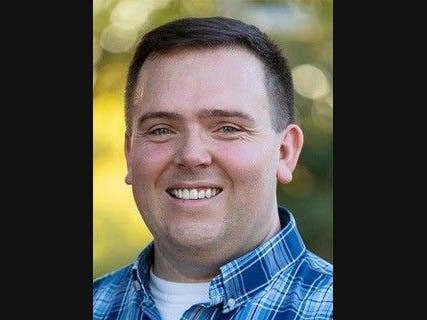
SCOTTSDALE, AZ — James Rowe moved more than 5,200 miles on a inkling of a brighter future. That future surrounded the ability to transform the way Americans with hearing impairments hear the world around them. It's that vision that convinced Rowe to leave his job at England's Royal National Institute of Blind People to join Scottsdale-based OTOjOY, which was founded by German-born PhD student, Thomas Kaufmann, in 2012. Rowe is now the CEO of OTOjOY, aiming to use his background as a speech pathologist to ensure that millions of Americans have the ability to connect their existing hearing devices (such as hearing aids and cochlear implants) to hearing loop installations. Patch talked with Rowe about his decision to join OTOjOY, as well as how his new role fits into the Valley's small business community, especially given how May is Better Speech and Hearing Month. Below is a transcript of that conversation, edited for brevity and clarity. Q: Take me through why you joined OTOjOY in an executive role? A: Before I joined OTOjOY, I was actually working for the largest nonprofit in the world, an organization called the RNIB - Royal National Institute of Blind People in the UK. And I managed all of our commercial businesses over there. One of those businesses was a hearing loop business. And I guess probably two and a half years ago or three years ago, the board of the RNIB asked if we were going to internationalize any of our businesses, what would you in your particular directory do? So I started to do some research. And it turns out that even though hearing loop technology has been installed for I don't know 50 years in, in Europe, here in the US, it was still relatively unknown. It's only been installed here for the last six or seven years. And so I went back to the board at the rnav. And I said, 'You know what, I think moving into the U.S. would be a good thing for us to do.' They sent me out to a conference in Utah, I met with [OTOjOY founder Thomas Kauffman]. That led to me doing a little bit of consulting work with him. And eventually, the board of the RNIB decided not to internationalize but I was completely hooked with both Thomas and the work that he was doing over here on the west coast. And his board gave me the opportunity to come and lead this company, and get it to really be the biggest hearing loop company and in the U.S., there was just too good of an opportunity to pass up. So I had a long conversation with my wife, pretty sure that lasted a good couple of weeks, trying to decide whether or not we should move our lives from Cambridge in the UK to Phoenix in the U.S. But we decided that the opportunity was just far too good to pass up. So here I am. Q: You mentioned the opportunity, what particularly about the opportunity that OTOjOY presented, made it a can't-miss opportunity for you and your family? A: Part of the reason, I think, is Thomas himself, the founder of the business. There's not a lot of visionaries in the hearing loop world, because the technology's been around for a long time. There are a number of small companies that install the technology on a local basis around the U.S. But Thomas's vision is definitely one of outstanding customer service, best in class products, and the right customer service, no matter who that customer is every time. And he also has some really interesting ideas about how the technology should be developed in the future. Something that I hadn't seen anywhere else at the not even at the charity, which is which had been doing this for 50 years. So there's definitely something about the appeal of working alongside Thomas, he really does have some incredible ideas for the future of the business. But then also, there's something really appealing about being able to bring a really tried and true, tested technology. It's technology that is preferred by people with hearing loss. We hear that all the time all over the world. If people live with hearing loss, they're already using a hearing device or hearing aid or a cochlear implant. Hearing loop technology is it for them. The best way for them to be able to listen in large venues. And so being able to be a part of the country's hearing loop journey was just was just too good of an opportunity to pass up. The chance for me to be a part of a company that really does bring this best in class solution across the nation was too good of a business opportunity not to not to take. Q: Where do you see OTOjOY going as a company under your leadership along with Thomas and why do you believe it'll go that direction? A: So at the moment, OTOjOY is licensed in California, Arizona and Washington State.We have aspirations to be a national company and I'm under no illusion at how much work that will take. But I'd like to think that inside the next decade, we'll certainly be in probably half of the country if not a little bit more. And within 20 years, I could see us being a national organization, I'd like to think that OTOjOY has an opportunity to become the best-known company in this particular technology. So I think from a hearing loop perspective, definitely becoming a national organization is the first aspiration. And then Thomas has some technology ideas that would completely transform the industry. And so being able to lead the company on a path that allows him to implement this new technology would be fantastic. So the second goal is definitely a new technology goal. So those two things: let's become a national organization, the biggest in the company, and bring new technology into this market that would transform not just the sector here, but but all over the globe. Q: You mentioned the market. Obviously, you guys are headquartered in Scottsdale. Take me through kind of how being in this area helps in terms of trying to hit those goals you just mentioned and how it plays into OTOjOY's vision going forward, in your opinion? A: So Thomas actually founded the company in Santa Barbara, Calif., and then moved here into the Phoenix area about three years ago. And he'll tell you that there were three reasons for that move. The first is that Arizona is a very welcoming state for new business or growing businesses. There's a lot of support here from the commerce authority. There is a really vibrant startup small business community in the Valley. Our headquarters are in Scottsdale, we're in north Scottsdale, and there's a really vibrant small business community here. There's a huge amount of support from larger established businesses, particularly through the Arizona Commerce Authority. So that was one of the reasons. I think another of the reasons is that there's a lot of investment into the state at the moment. And you do see a lot of really well-established technology companies moving here, that brings with them a lot of talent. And so a bit like Austin, in Texas, Thomas has identified Phoenix as being one of those growing cities in the U.S. that would be incredibly supportive, and also provide a lot of really good resources back into OTOjOY. And then the third reason and this is just as important is that, for us to be successful in any location, there does need to be a really strong base of advocates with hearing loss who understand what hearing loop technology is, want it to be implemented, and really drive awareness into venues. Of course, OTOjOY does that itself, but it's a lot more powerful when it comes from people who live with hearing loss. And the Valley has three really active Hearing Loss Association of America chapters, so there are lots of hearing loop advocates who were doing a really great job raising awareness of the technology in their local communities. But what they were missing was a company that was big enough to be able to take on those projects. And OTOjOY really filled that gap. So certainly, as we look to expand, there's a lot that we've learned over the last three years about being able to insert ourselves into the advocacy community, that I know that we'll take forward as lessons as we enter new cities, and then in the future, new states. Q: What spurred your interest in assisting those with hearing impairments, in particular? A: I'm a speech and language pathologist by training. And for more than 20 years, I've worked with people who have challenges with communication. So for the first 15 years of my career, I worked with people who couldn't talk. And then for the last six or seven years, specifically with people who can't hear. And I think I bore people to tears sometimes when I talk about it, but I just think the whole process of human communication is just incredible. If you really sit back and think about what it is that we're doing right now, even in this conversation, the fact that I am able to not just formulate a sentence in my head and then translate that into speech. Using a whole variety of systems, my breathing system All of my motor articulators in my face my mouth, I'm able to create enough pressure to be able to push the sound out of my lungs through my mouth. Not only is all of that mechanically, almost impossible to coordinate when you really think about it, but I'm able to generate the thoughts, turn it into a coherent sentence, and then you, on the other end of the phone are able to hear that understand it and in real time, come back with a response or with another question, that conversation is such a complicated process. And yet, we take it so much for granted. So that's why I wanted to become a speech pathologist in the first place, I wanted to work with people who were challenged and being able to do something that the vast majority of us took for granted. And so specifically, being able to help people with hearing loss, the biggest side effect of hearing loss, we know through research, is withdrawal, and isolation, if I can't hear, rather than try and do something really positive about it, I would typically choose to withdraw myself from those environments where it's difficult for me to hear, I choose to stop interacting socially, I choose to stop being human, I guess, at its core. And so being able to have an opportunity of working with organizations and obviously now with auto joy, to be able to use technology to help people get back that ability to communicate. That's what drives me every day. I couldn't be more passionate about anything else. So, that's my passion in a nutshell. Q: What would you want people that read this profile to know about OTOjOY's products, in light of May being Better Speech and Hearing Month? A: The biggest takeaway people need to know is that this technology exists. The biggest barrier we have in the U.S. at the moment is that even for a lot of people that live with hearing loss every day, even for people that were hearing aids, or who have cochlear implants, they don't know that hearing loop technology is available to help them either in big venues, or at counters, reception desks, they don't know even that this technology can be installed at home so that they can hear their TV better. The biggest takeaway needs to be that people are just aware that this technology exists to be able to help. I think the second thing is that the reason they're not aware is because most of us think that hearing aids correct hearing in the same way that glasses correct vision. And while that's true to a certain extent, in kind of one-on-one conversations or in small groups, which is really where hearing aids cochlear implants do a great job, if I'm having a conversation with my wife, my hearing aids are going to pick up her speech, no problem. And I'm going to have that that sound amplified, I'm going to be able to communicate much better in that one-on-one situation, where they really fail where a hearing aid does a bad job or a cochlear implant does a bad job is in a much larger venue. And what the hearing aid isn't able to do is pick out the sound that the person really wants to listen to. If we take church as an example, we do a lot of installations into places of worship. In church, the person wearing a hearing aid, they are going to pick up some of what the pastor is saying, as he talks, it's going to come through the loudspeakers in the church. But the hearing aid is also going to amplify every other sound that it hears. So it'll amplify the air conditioning unit, it'll amplify the baby crying two rows back, it'll amplify the door slamming the shuffling of feet, all of those environmental noises, it's going to amplify, what happens is that the person then just gets overwhelmed by all of the noise that's coming through their hearing aid. The hearing loop does is takes away all of that extraneous background noise, so that the person only hears the sound they're meant to only hears the pastor in church, for example, or only hears the teller at the counter in the bank. And so I think it's really important that people know that while they're hearing a bar are great in one on one situations. They will also be great in those big venues where at the moment they struggle, provided that venue has a hearing loop installed, that we can just do a better job at educating people making them more aware that this amazing technology exists.
Discussion
By posting you agree to the Terms and Privacy Policy.