Did Elmhurst Aldermen Legally Close Doors?
News
Elmhurst IL
29 April, 2021
9:38 AM
Description
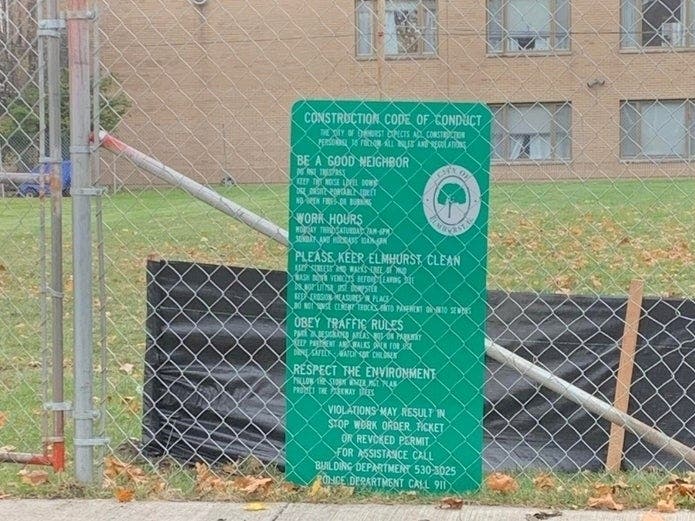
ELMHURST, IL — In November, the Elmhurst City Council met behind closed doors to discuss whether to extend the permit for a nursing home expansion that neighbors opposed. Three months later, City Manager Jim Grabowski emailed Alderman Michael Bram that the meeting was closed because of "pending/probable litigation." No litigation was pending, so the city must have been using the "probable" exception under the state Open Meetings Act. Earlier this month, Patch submitted a public records request for any documentation demonstrating litigation was probable — such as a threat from Elmhurst Extended Care Center or some other party. This week, city attorney Peter Pacione of Rosemont-based Storino, Ramello & Durkin said in a letter that the city had no documents responsive to Patch's request. This leaves the possibility that someone verbally threatened litigation in connection with the issue of the nursing home's permit for an expansion. On Tuesday, Patch emailed Grabowski and Kassondra Schref, the city's communications manager, asking about the reason the city held the closed session. Neither responded. The Open Meetings Act allows closed sessions in limited circumstances. Under the law, a public body can close its doors to discuss issues involving "probable" litigation. But if litigation is probable, the body must list the finding in its closed session minutes, which are unavailable to the public. A few years ago, the McLean County state's attorney filed a complaint that the Bloomington City Council had discussed its agreement with neighboring Normal in closed session. In its defense, Bloomington argued that litigation was probable. But the state attorney general's office concluded in 2017 that Bloomington was in the wrong. The closed discussion was about the agreement itself, rather than the strategies, theories or consequences related to probable litigation, the attorney general ruled. In Grabowski's email to Alderman Bram, he said Mayor Steve Morley asked aldermen in closed session for their thoughts on extending the nursing home's permit, which had just expired. A majority agreed with the city attorney that the nursing home had met the "substantially under way" standard because of the amount of money spent on building drawings, purchase of a building permit and the erection of a construction fence, among other things, Grabowski said. "There was no further action needed from the city," Grabowski said. The city's thinking on that issue recently changed, with a key city committee recommending rejecting the nursing home's request for a two-year extension. Construction has never begun on the project. Grabowski's email indicated the City Council talked about the extension itself, not probable litigation. But his email may not have been a comprehensive account of the discussion. In an interview, Ben Silver, an attorney with the Elmhurst-based Citizen Advocacy Center, said the city's decision to close the meeting under the "probable" litigation exception was voluntary. No law required the council to close its doors, he said. "This hinders public transparency when a decision is made when it's discussed in executive session," Silver said. "It's the City Council's responsibility to make sure the public understands the full basis for the decision that it made."
Discussion
By posting you agree to the Terms and Privacy Policy.