What is Mercury Porosimetry Testing?
Classifieds
New York City NY
05 April, 2021
9:31 AM
Description
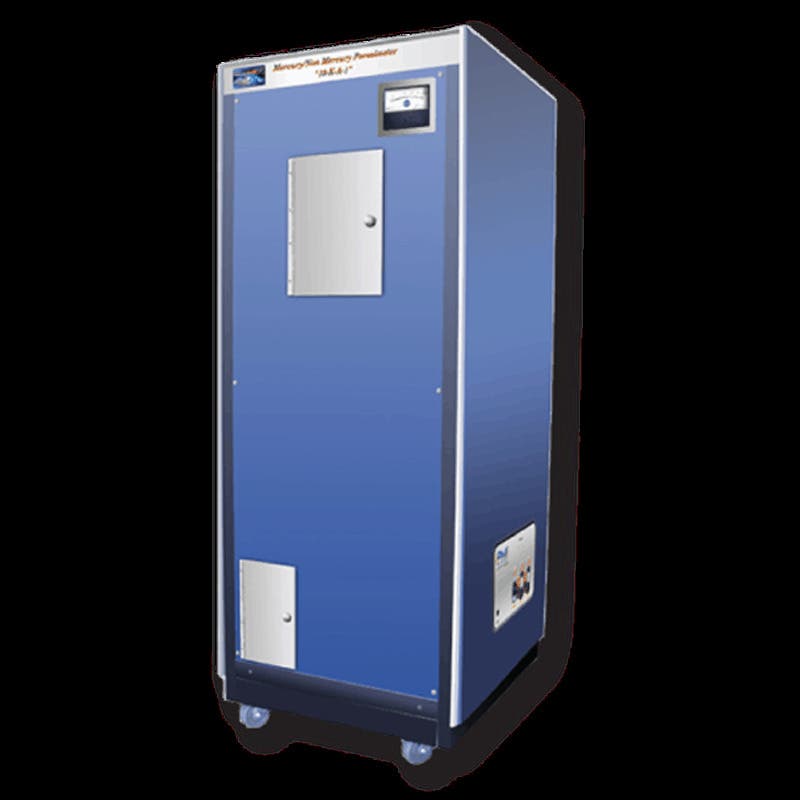
Mercury Porosimetry testing is the new and improved method for measuring pore sizes, distribution, density, and other porosity-related facets of a material. Porosity is important for understanding the structure, formation, and potential of various substances. Porosity also affects the physical properties and, subsequently, its behavior with the environment it's in. Absorption, permeability, density, strength, and other factors influenced by the given substance's porosity determine how it will be used appropriately. Today, let's take a deep dive into everything important and technical regarding the Mercury Porosity process. Everything That Makes Mercury Porosimetry Testing Unique Analysis Mercury is a non-wetting liquid, and it does not wet most substances spontaneously for penetrating pores through capillary action. The liquid is forced into the pores through the application of external pressure. The required balanced pressure is inversely proportional to the pressure and the pore size required to intrude mercury into macropores. Moreover, the greater pores will be forcing the mercury into the small pores. Mercury Porosimetry testing is the progressive intrusion of mercury into the porous structure under controlled pressure. The machine generates volume and size distributions from the intrusion data's pressure as per the Washburn Equation (D = - 4 y (cos0) / P). Theory Due to mercury's non-wetting property combined with the high surface tension, the liquid qualifies to be used for probing pore space. At each surface interface with the liquid, there is a tension that acts indirectly with the interface. This tension is known as the "surface tension" of the elastic membrane contacting the surface until the surface forces an equilibrium. The surface area determined during the Mercury Porosimetry Testing can be defined as the force per unit length, which is acting along the liquid's surface at the right angles to a line that separates the two phases. If the mercury is placed in contact with a pore opening, the mercury's surface tension acts along the line of contact with the opening. This is equal to the length of the opening's perimeter, creating a resisting force of entry. The magnitude of the resistance is proportional to the length of the contact line, the surface tension of the mercury, and the cosine of the contact. During the Mercury Porosimetry Testing, external pressure is applied. This pressure tends to force the mercury into the opening acts over the interface's surface, bridging the opening. This force, therefore, is the product of pressure and the area over which the pressure is applied. At an equilibrium state, the pores' pressure in which the mercury has intruded has diameters greater than the ones calculated by Washburn Equation. By measuring the intruded mercury's volume with each pressure change, the pores' volume in the corresponding size class is known. The device which is used to conduct Mercury Porosimetry Testing is known as a mercury intrusion porosimeter. Let's discuss a bit about the machine that works wonders. Mercury Intrusion Porosimeter Mercury Porosimeter is used to test the industrial processes that involve mercury as their wetting liquid. This device measures the pore sizes based on the physical principle that states that a non-wetting, non-reactive fluid only penetrates the purest of pores. It does so when pressure is allowed to intrude through the pores for specific diameters following the Washburn Equation: D = - 4 y (cos0) / P In the equation, (y) is the surface tension, (P) stands for applied pressure, (0) is the angle of contact, (D) for the diameter of the intruded pore. The equation measures the volume of mercury that has intruded the sample as a function of increasing pressure. This permits pore volume distribution and size. The test is capable of reaching values between 3.6 nanometers and 1100 microns and 0.2 to 60,000 psi. Conclusion, Mercury Porosimetry Testing is an advanced process that the Mercury Intrusion Porosimeter performs. The machine's functions cater to specific industrial procedures, making it suitable for research, development, and quality assurance purposes. So,
Discussion
By posting you agree to the Terms and Privacy Policy.