Soule: Sometimes a Bovine Wants His Bro-vines
News
Concord NH
17 March, 2021
4:21 PM
Description
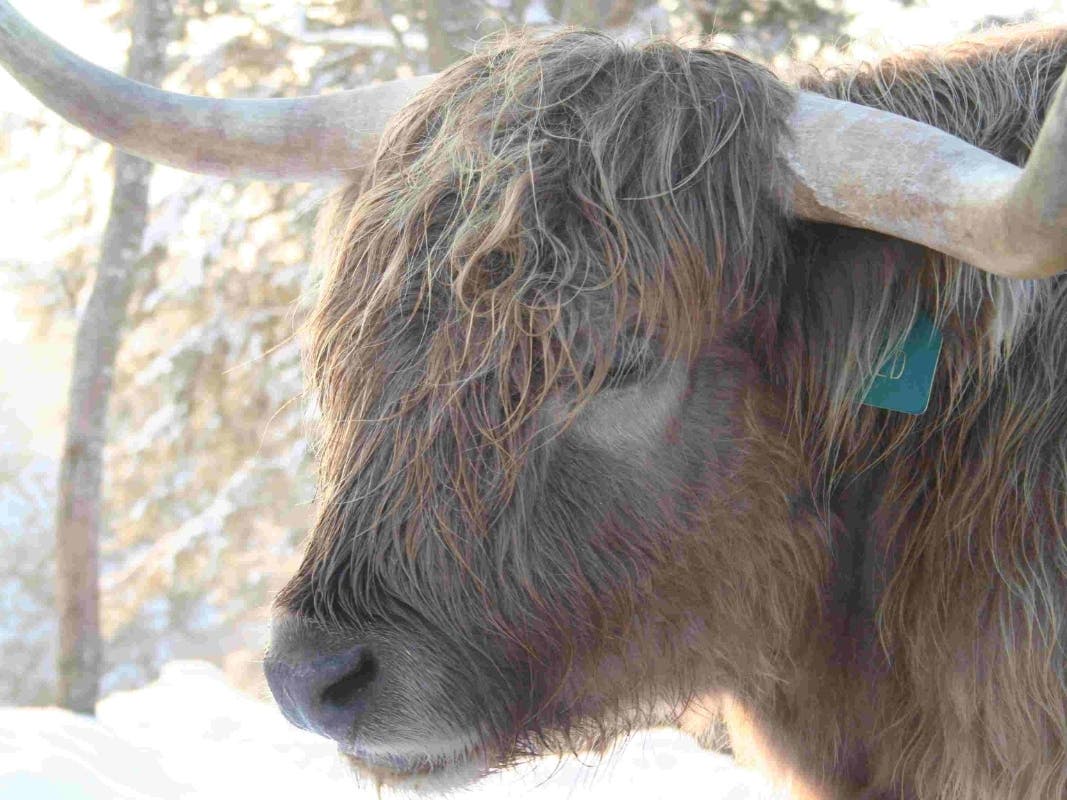
Topper, the black Highlander steer, was standing at the gate to the steers' field, wanting in. He waited patiently until I noticed him and let him join his five friends. For a while, he had lived in "the girls' field" -- with the calves and pregnant cows, lured there by the charms of a heifer named Shannon. Steers can be sexier than you'd expect. Shannon, an escape artist whose skills rivaled Houdini, had been relegated to a secure paddock and was out of Topper's reach. Topper must have missed the guys' companionship because, for two days, he stood at the fence, watching his buddies, willing himself back with them. Eventually, he escaped the girls' field, and that's when I found him standing at the gate. Like people, cattle have friends; peers we can butt heads with, and no one is hurt. I'm not suggesting that humans like to smash our heads together, but you've seen teenage boys horsing around—same thing. Head-butting is one way that cattle interact. A bull will do it to bully another bull. But among friends, it is playful banter; conversation. "How's it going? You look sad. Here's a head butt for you!" Topper must have missed jousting with boys who understood him and jousted back. Another form of cattle-communication is licking. Their tongues are like coarse sandpaper. They have to be rough so they can gather up slippery grass and hold it while biting. Cattle don't have bottom-front teeth, so a robust and scratchy tongue helps them eat. Those tongues are also useful grooming tools for themselves and other cattle. Read More Carole Soule is co-owner of Miles Smith Farm, where she raises and sells beef, pork, lamb, eggs, and other local products.
Discussion
By posting you agree to the Terms and Privacy Policy.