Smithsonian Collects Items From 1st Vaccine Issued To LIJ Nurse
News
Port Washington NY
11 March, 2021
10:19 AM
Description
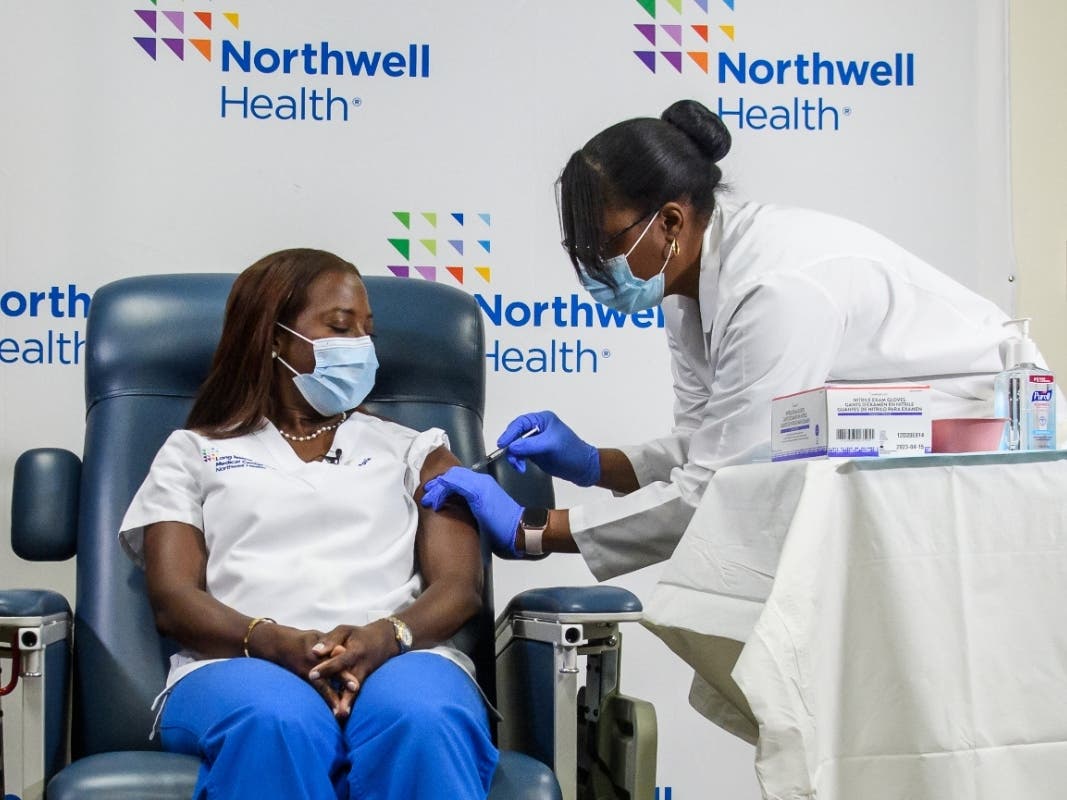
NEW YORK, NY — Long Island Jewish Hospital Medical Center nurse Sandra Lindsay is making headlines, again. Tokens from the historic moment the trailblazing intensive care nurse from Port Washington received the first COVID-19 vaccination have been cataloged at the Smithsonian Institution's National Museum of American History, according to a news release. They include the two spent vials of Pfizer-BioNTech COVID-19 vaccine that were used to vaccinate Lindsay, her vaccination record card, scrubs, and hospital identification badge, which were recently donated by Northwell Health, officials said. "I feel like healing is coming," said Lindsay after she was inoculated in a moment that was broadcast live in December. "I hope this marks the beginning of the end in a very painful time in our history." The museum formed a rapid-response collecting task force to document scientific and medical aspects of the pandemic, as well as the effects and responses in the areas of business, work, politics and culture in April 2020, officials said. The Smithsonian's acquisition also includes additional vials from doses of the Pfizer-BioNTech and Moderna vaccines administered at Northwell, as well as the supplies needed to prepare, inject and track the vaccinations, like diluent, syringes and vaccination record cards. Northwell also donated shipping materials, which document the "enormous effort" required to support vaccine distribution and preserve vaccine potency, such as a specialized vaccine shipper that monitors and maintains temperature, officials said. Northwell's donation joins the museum's medicine and science collections that include a penicillin mold from Alexander Fleming, Jonas Salk's original polio vaccine, early genetically engineered drugs and 19th-century patent medicines, officials said. Health and safety protocols has seen the museum bringing in only a limited number of artifacts into the building, but additional artifacts will be brought in and processed when the museum returns to full operation, officials said. Anthea M. Hartig, the museum's Elizabeth MacMillan director, said the "urgent need for effective vaccines in the U.S. was met with unprecedented speed and emergency review and approval." "These now historic artifacts document not only this remarkable scientific progress but represent the hope offered to millions living through the cascading crises brought on by COVID-19," she added. Northwell Health President and Chief Executive Officer Michael Dowling said the vaccine was the first real sign of hope after "so many dark months." "Northwell was prepared to put shots in arms as soon as the vaccine arrived, not to make history but to protect our frontline workers battling COVID-19 as quickly as possible," he said. "But when Sandra Lindsay rolled up her sleeve, we weren't just showing our team members the safety and efficacy of this groundbreaking vaccine — we were telling the world that our country was beginning a new fight back to normalcy. It was an extraordinary moment, and I thank the Smithsonian for preserving this important milestone."
Discussion
By posting you agree to the Terms and Privacy Policy.