South African Coronavirus Variant Found In Hillsborough County
News
Tampa FL
02 March, 2021
1:36 PM
Description
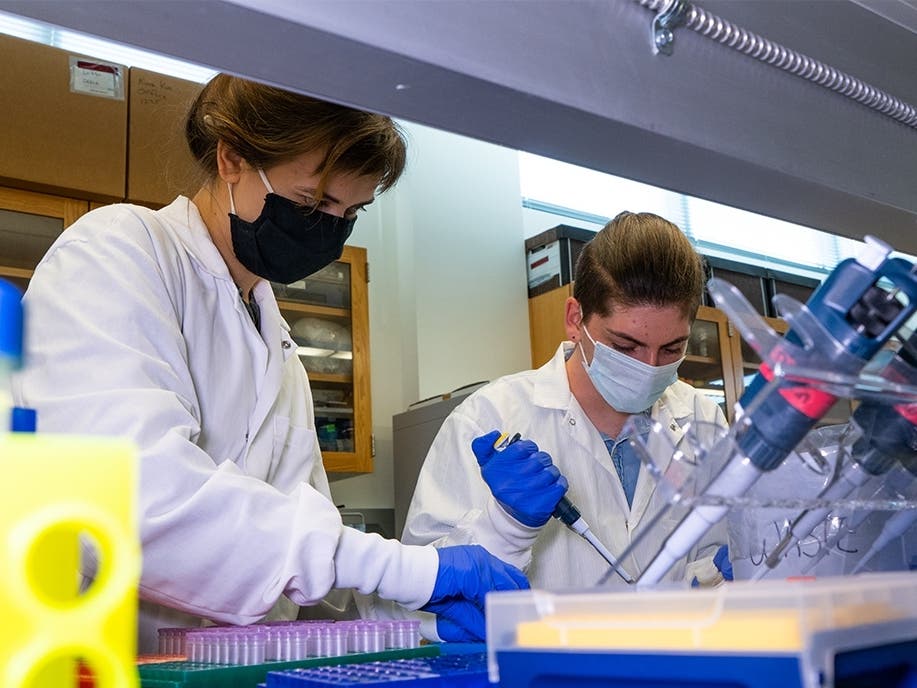
HILLSBOROUGH COUNTY, FL — The first case of the South African B.1.351 coronavirus variant has been identified in Florida. The Florida Department of Health confirmed Monday that the case was found in a Hillsborough County resident. According to the Centers for Disease Control and Prevention, Florida is the 15th state to report a case of the variant that was first seen in the United States on Sunday. "The emerging variants CDC is closely monitoring have mutations in the virus genome that alter the characteristics and cause the virus to act differently in ways that are significant to public health," the CDC said in a statement. "It's important to understand that genetic mutations are expected, and some variants can spread and become predominant while others subside." The South African variant of the coronavirus emerged from the United Kingdom variant (B.1.1.7 variant) that was first identified at the end of December, according to the CDC. This variant has since been detected in a number of countries around the world, including 2,400 cases in the United States. Scientists in the United Kingdom reported evidence suggesting the B.1.1.7 variant may be associated with an increased risk of death. Since then, researchers have identified the South African variant and the Brazil variant (P.1 variant) first seen in four travelers from Brazil who were tested during a routine screening at an airport outside Tokyo, Japan at the end of January. There have been 53 cases of the South African variant found in 16 states and 10 cases of the Brazil variant found in five states. Epidemiologists at the University of South Florida College of Public Health in Tampa have launched a study to determine the prevalence of the coronavirus variants in Tampa Bay. According to USF, the researchers are conducting genomic sequencing of positive pooled samples collected from Tampa General Hospital and USF's Tampa campus and comparing their makeup to the highly contagious variants that have originated in South Africa, the United Kingdom and Brazil, as well as other lesser-known mutations. Tom Unnasch, professor of epidemiology, is looking specifically at the spike protein of SARS-coV-2, which is what allows the virus to invade cells and cause infection. Vaccines target the spike protein to provide immunity. But as the spike protein mutates, vaccines become less effective. By identifying the presence of specific variants, pharmaceutical companies can make revisions and manufacture new vaccines. USF College of Public Health"I think we're going to be playing a game of whack-a-mole with this thing for the next year or two, where new vaccines will constantly need to be developed," Unnasch said. "It'll be like a fast-forward version of what we do with the influenza vaccines each year." Eventually, Unnasch said the coronavirus will most likely mutate to the point that it will no longer be a threat to lives. "It's likely COVID-19 will eventually mutate to the point of where it's more like a cold rather than a life-threatening illness," he said. "It won't go away fast, but it will be less of a problem than it is now." Unnasch and his graduate students are analyzing samples collected by Tampa General Hospital in spring 2020, prior to the arrival of variants, as a baseline for detecting potential trends. They'll spend the next few weeks monitoring for variants at USF. In the meantime, USF Health professor of epidemiology Edwin Michael has been using the SEIRcast COVID-19 Forecasting and Planning portal he developed in cooperation with the University of Notre Dame to project how social behaviors and vaccinations are affecting the rate of new cases and their impact on hospitalizations. His team is developing an extension to the model that simulates how emergent variants could influence the course of the pandemic. He expects to have results within the next few weeks. "Our current COVID-19 model attempts to estimate the likely impact of any new virus spread on the trajectory of this pandemic through changes in the overall transmission rate, and so far, we have not found any significant effects yet," Michael said. "Genomic surveillance data from Professor Unnasch's lab will be critical to more reliably model the spread of these variants." While the number of cases reported in Florida has dramatically slowed since the winter surge, experts are concerned about the growing presence of variants in Hillsborough County. Michael says, with the continuation of social measures and the administration of vaccines, the pandemic could end in Tampa Bay by mid-July yet mutate to resemble low incidences of the flu over the long-term.
Discussion
By posting you agree to the Terms and Privacy Policy.