County To Human Traffickers: Stay Away During Super Bowl, Beyond
News
Tampa FL
06 February, 2021
10:05 PM
Description
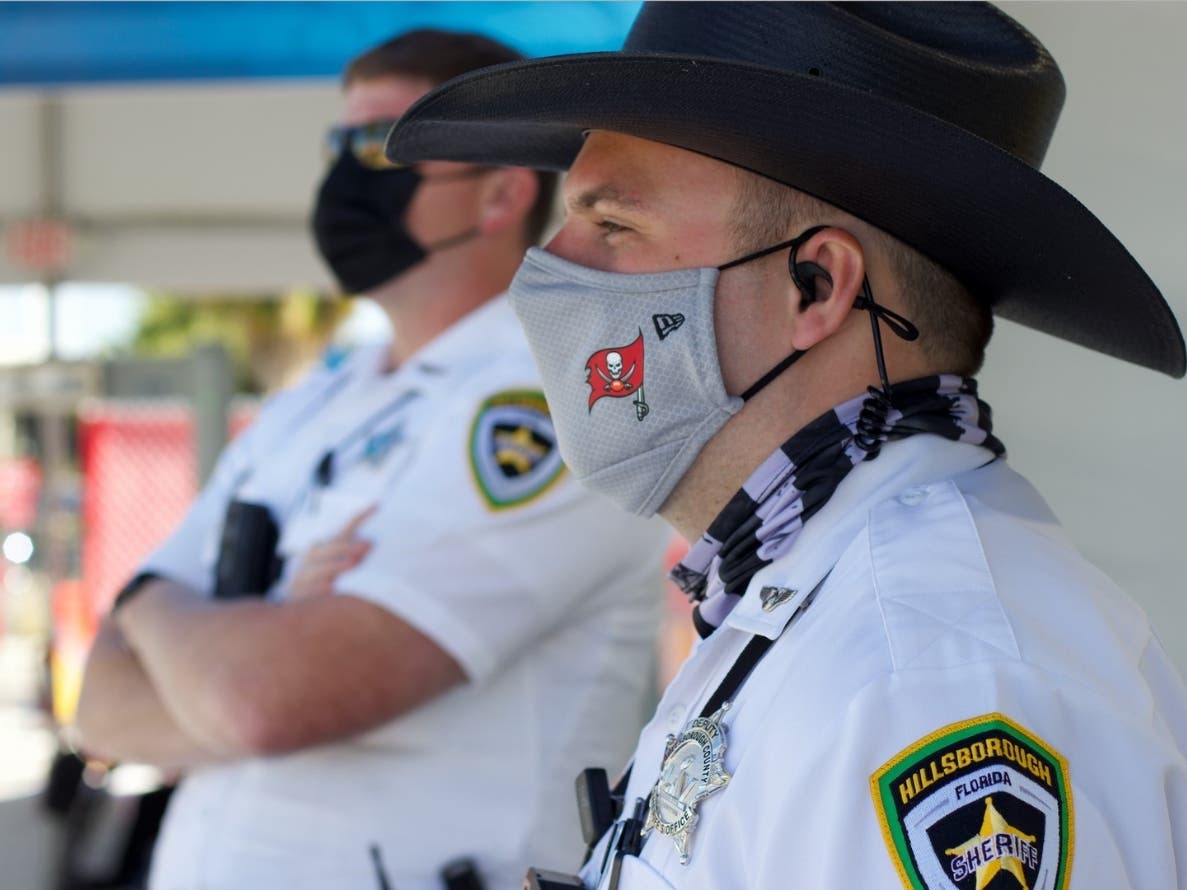
TAMPA, FL — It was a busy night for officers from Hillsborough County Code Enforcement, Tampa Neighborhood Enforcement and the Tampa Police Department. They were on a mission that began two years ago when the Hillsborough County Commission formed the Commission on Human Trafficking to fight the crime that's given Tampa the reputation as one of the top cities in the country for sex slavery. On a single night, just days before hordes of visitors were due to come to Tampa for Super Bowl LV, code enforcement and law enforcement officers fanned out, inspecting 36 adult entertainment businesses to ensure they are complying with the county's human trafficking ordinance. The county's ordinance requires strip clubs, adult bookstores and theaters, cabarets and other adult entertainment businesses to post signs in conspicuous places like front doors and bathroom stalls, providing information about human trafficking for employees, patrons and victims. The signs detail how to contact the National Human Trafficking Resource Center if they or someone they know is a victim of human trafficking. They're written in English, Spanish, Mandarin and Cantonese because human trafficking victims are often tricked into coming to the United States from other countries on the pretense of a better life only to find themselves trapped in a trafficking syndicate. While only three businesses received $265 citations for not complying with the ordinance, the message to adult business owners and employees was loud and clear: Hillsborough County will no longer tolerate human trafficking. While events such as the Super Bowl are great for Tampa Bay's tourism economy, they're also a magnet for human traffickers who have no trouble finding clients amongst the thousands of visitors look for a good time. Outside stadiums where Super Bowls are played, sex trafficking flourishes, with an estimated 10,000 victims flooding host cities to be offered to those willing to pay for sex. Even without the Super Bowl, Tampa Bay consistently ranks third in the nation for the number of calls made to the National Human Trafficking Hot Line, according to Crisis Center of Tampa Bay President and CEO Clara Reynolds. That's one of the reasons County Commissioner Kimberly Overman called for the formation of the county's Commission on Human Trafficking and urged her fellow commissioners to approve a 12-month renewable $83,000 contract with the Crisis Center of Tampa Bay to provide direct services to human trafficking victims. In a Zoom interview with members of the media, Overman and Reynolds talked about the human trafficking problem in Tampa Bay, which is pervasive but invisible. While more women, and even some men, are now willing to come forward to report sexual assaults, human trafficking victims rarely seek help, said Reynolds. For human trafficking victims, the assault doesn't end. The abuse, the threats, the dependence on their captors for drugs they've intentionally been hooked on and their physical captivity continues. Their fear of retribution and instinct for self-survival prevents them from telling anyone what's happening. As a result, said Reynolds, the crisis center receives relatively few calls to its human trafficking hotline. However, she believes that will change as more law enforcement agencies investigate human trafficking rings, arrest the traffickers and free the victims who were too frightened to speak up before. The U.S. Institute Against Human Trafficking, a faith-based, nonprofit organization with offices in Tampa, Washington, D.C., Los Angeles, Las Vegas and Austin, has made a concerted effort in Tampa Bay to establish TraffickingFree Zones. The TraffickingFree Zone program, created in collaboration with law enforcement, businesses, schools, churches and other community members, emphasizes arresting and prosecuting sex buyers (the johns) instead of the victims. Stephanie Costolo, Florida regional manager of TraffickingFree Zones at the U.S. Institute Against Human Trafficking, said communities that establish TraffickingFree Zones have seen measurable decreases in sex trafficking. The program includes an education element. Costolo spends much of her time speaking to law enforcement, public transportation staff, hotel, taxi, airport and bus station workers and employees at major entertainment venues. Those are the people who are most likely to encounter human trafficking victims. They need to know how to spot a victim and what to do to help them. It's a mission that Hillsborough County Sheriff Chad Chronister has taken to heart. He's a member of the Statewide Council on Human Trafficking in Florida, consisting of 15 member prosecutors, legislators, experts in health, education and social services and law enforcement, and has led a number of operations in Hillsborough County targeting human trafficking. "The Hillsborough County Sheriff's Office is committed to ending human trafficking every day of the year, not just during a major sporting event like the Super Bowl," Chronister said during a news conference this week with Florida Attorney General Ashley Moody. "Through an ongoing and sustained campaign to reduce the demand, our detectives have gone undercover to identify and apprehend individuals who are lurking and intent on sexually exploiting another person. Choosing to take advantage and exploiting others for your own personal escape is not a right, it's a ticket to jail." On Jan. 11, National Human Trafficking Awareness Day, Chronister announced the results of a month-long operation, dubbed Operation Interception, aimed at those seeking sex for money. Chronister said the goal of the operation was to reduce the customer base for sex traffickers. At the same time, he said it was a warning to those coming to Tampa for the Super Bowl that Hillsborough County has zero tolerance when it comes to sex trafficking. From Dec. 7 to Jan. 9, sheriff's detectives worked undercover posting online ads offering to meet up and make themselves available to be purchased for sex. Female detectives posed as prostitutes on the streets. A total of 71 johns were arrested and charged with soliciting. "Like any major sporting event, the Super Bowl should not be a venue where these types of crimes occur on the sidelines, whether it's before, during or after the game," said Chronister. "We know from past experiences with major sporting events that there will be some who travel for the exclusive purpose of taking advantage of women and children. I want to make it very clear; if you are planning to engage in the sexual exploitation of others, I'm urging you to think twice. We will find you, and you will be arrested." At the same time, Florida Rep. Jackie Toledo (R-Tampa), who also sits on the Statewide Council on Human Trafficking, is tackling the problem from the legislative side. On Jan. 28, she was joined by advocates and survivors as she announced the filing of House Bill 523 to expand services and provide greater protections for trafficking victims and increase penalties for human traffickers. The bill would allow survivors to expunge charges that were dropped or ruled not guilty. Many trafficking victims are arrested on drug and prostitution charges, although it's the trafficker who gets them hooked on drugs and forces them to have sex for money. "House Bill 523 will enact a human trafficking victim advocate program, reform the expungement process for survivors and resolve issues during prosecution," said Toledo. "Survivors deserve to move on with their lives and should not live in fear. This means the state must ensure these criminals are prosecuted. As Tampa prepares to host the Super Bowl, we must show these bad actors that Florida will not tolerate these horrendous acts." Florida Sen. Lauren Book (D-Broward), also a member of the council, filed a companion bill in the Florida Senate. "Florida is a hotbed for human trafficking, but despite being the third highest trafficking destination in the country - with half of all victims being children – our conviction rate for these crimes is woefully low," Book said. "To stop traffickers in their tracks, we must give prosecutors the tools they need to bring these predators to justice – and that's exactly what we aim to do." Brent Woody, executive director of the Justice Restoration Center, represents 90 survivors of human trafficking who are eligible to expunge their criminal records if the bill passes. Woody said the bill will remove roadblocks for victims who want to turn their lives around. "Florida has been a leading national voice in understanding that trafficked persons are coerced into situations that result in criminal records," he said. "A criminal record, no matter how undeserved, will stand in the way of obtaining safe housing, sustainable employment, education, and even a driver's license." See related stories: App That Helps Sex Victims Launched By Tampa Bay Task ForceThe Seedier Side Of The Super Bowl: Combating Sex TraffickingGrant To Fund Human Trafficking Task Force In Tampa Bay
Discussion
By posting you agree to the Terms and Privacy Policy.