Illinois at the End of the Ice Age: Champaign's Earliest Inhabitants
Other
200 West Green Street,Champaign IL 61820
20 July, 2023
Description
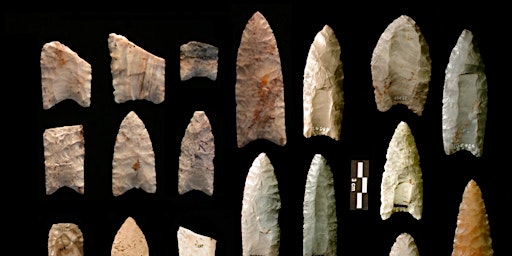
Rapid environmental change in the western Great Lakes at the end of the last Ice Age (the Late Pleistocene/Early Holocene) led to the development of multiple productive ecosystems which would have been a major draw for hunter-gatherers. Illinois was at the center of these changes, and documentation of avocational and public collections for early fluted points from the western Great Lakes signals a substantial Clovis and later Folsom occupation that spanned much of Indiana, Illinois, and the southern half of Wisconsin. How these earliest human groups in Illinois made a living, how they moved around the landscape, what they ate, and how they organized themselves socially are all active areas of research that the archaeological record of Champaign County and surrounding areas can shed light on. As more modern environments developed during the Early Holocene, the archaeological record suggests the development of an increasingly dynamic, but relatively open social landscape that predates the onset of demographic packing, more fixed territories, and lower levels of group mobility. The scale and directionality of lithic transport varies in important ways across the region, providing insight into the spatial dimension of early social systems in the Midwest.
Discussion
By posting you agree to the Terms and Privacy Policy.