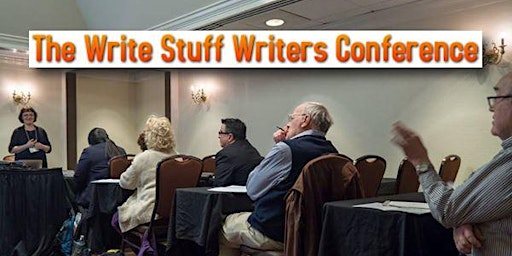
The Write Stuff Writers Conference: 3 Days - 24 events - GLVWG.ORG
Other
300 Gateway Drive,Bethlehem PA 18017
23 March, 2023
Description
What people say about the Write Stuff Writers Conference: I add my congratulations for a wonderful conference - great content and a mastery of the technology. Thank you so much. -Martha Cichelli Here here! Giving super positive feedback! Grandest. Conference. Ever. Had so much fun! -Kelly Bender Yes, this was pioneering work, and all very well done. Congratulations! -Al Tucher Thanks for creating a great learning opportunity. I was up writing this morning. It was a gift. -Judy England-McCarthy Having been at many conferences over my many years--writing conferences, nursing conferences, business conferences-- this one was the best----I'll repeat that: THE best. -Mitzi Flyte MAJOR kudos to the folks on The Write Stuff Committee, who not only had to learn a whole new format in how to present a conference, but did so with no technical issues and the same great quality throughout. -Laurel Wenson Questions? email: [email protected] V. Snyder switched careers from meteorologist to novelist when she began writing the New York Times best-selling Study Series (Poison Study, Magic Study, Fire Study, Shadow Study, Night Study and Dawn Study) about a young woman who becomes a poison taster. Maria earned a Master of Arts degree in fiction writing from Seton Hill University. Unable to part company with Seton Hill and its wonderful writing program, Maria is currently a teacher and mentor for the MFA program. Her series include The Chronicles of Ixia, Poison Study, Healer, Glass, Soulfinders, Sentinels of the Galaxy, and Archives of the Invisible Sword. There is not enough space to list Maria’s numerous awards.Questions? email: [email protected] to enhance your writing skills?You have come to the right place. The Write Stuff(tm) offers a sterling faculty of writing and publishing professionals offering 24 events to help get you where you want to be in your writing career.Scroll down for faculty, detailed course descriptions and schedules.**Registration includes limited time access to recorded sessions for the days you register.**Expanded Saturday Course Descriptions:Maria Snyder Behind the Curtains: The workshop will take a “behind-the-scenes” dive into the operation of an independent bookstore. You’ll learn how they order books, set up events, and hand-sell titles. Also included is how authors can approach and work well with indie stores and how to avoid various faux pas like giving away an Amazon gift card during your signing. Writing a Series: Maria is the author of New York Times best-selling Study Series. Her other series include The Chronicles of Ixia, Poison Study, Healer, Glass, Soulfinders, Sentinels of the Galaxy, and Archives of the Invisible Sword. Learn the ins and outs writing series, how it works, and where it can take you. Michael Ventrella How the Law Really Works: If you're going to have someone arrested for murder, you should at least know how the system works! Criminal defense attorney Michael A. Ventrella explains the process by which people may be charged and how a trial really works. Bring questions!The Biggest Mistakes Made by New Authors: Author and editor Michael A. Ventrella goes quickly through a number of mistakes new authors make, and he knows because he made some of them himself. Some of this you may already know, but there's bound to be some advice in there that may hit you, because it's not all obvious.What Themed Anthology Editors Look For: There are many themed anthologies these days looking for great stories. How can you impress the editor and make your story stick out? Michael A. Ventrella gives some advice and examples from his own experience as both an editor and writer.Jon GibbsDouble Session: The Three Cs of Conflict: When it comes to fiction, the right type of conflict makes the difference between a great read and a dull one, but what is the right type of conflict? How do you create it? When (and where) should you apply it? And can you ever have too much? Join New Jersey author, Jon Gibbs, for a fun, interactive, workshop on how to create all the story conflict you need to keep those readers turning the pages. Please note: This is a hands-on session. Attendees should bring a notepad.The Funny Pages: No matter the genre, a little humor in a story goes a long way. But where do you apply it? What’s the best way? And how do you make something funny anyway? Join New Jersey author, Jon Gibbs, for a fun, interactive, workshop on using humor to do more than just making your reader smile. Also, there may be candy. Michelle LazurekThe Agent/Client Relationship: What You Need to Know: Premise: Every author dreams of being published. That's why working with an agent is so vital to your career. What do you need to know before working with one? Three things agents are (and three they are not) Five common misconceptions about the agent/client relationship What you need to before contacting an agent Bonus: Five things you need to create a stellar proposal that catches an agent's attentionWriting for Children: Purpose: To help writers who want to reach the next generation create compelling and engaging content while staying true to God’s Word Content: Why is writing children’s book so important? Five tips to help you if you have a desire to write but don’t know where to start Four ways to keep children engaged in the story How to structure your bookHow to Be a Voracious Self-Editor: So, you’ve written that stellar masterpiece (or so you think). Before you research potential places to submit your work, it is important to polish your work so it can shine brightly among the other submissions in your genre. Why the red pen is your friend in the editing stage Why self-editing is essential for any writer Who are editors you should hire to review your work (and who you shouldn't) We will edit a piece of work in class. Feel free to bring your project for possible review. Curtis SmithWriting Flash Fiction: Is flash fiction (and nonfiction) defined by just a word count? What does flash owe to poetry—and what does it owe to prose? What are the forms it utilizes? And amid all the possibilities of the genre, are there any solid connectors that exemplary pieces have in common? In this workshop, we look at what makes flash fiction work through examination, discussion, and writing.Process and Understanding How One's Brain Works: How can we use our natural rhythms and inclinations as an asset to our creative work? How can we harness our unique lenses and use them to draw a deeper focus upon our stories? In this session we’ll examine how to discover your individual creative process and work with your natural currents and inclinations. We will also look into submitting to lit journals and small presses as part two this presentation. (That’s the Process part.)Elements of a Short Story: This session will cover the basics of writing the literary short story—openings, setting, structure, characterization, and dialogue. By the end of this session, Curtis will have you ready to tackle your next story.Questions? email: [email protected]
Discussion
By posting you agree to the Terms and Privacy Policy.