Ballona Wetlands Fire: The Ecological Story
News
Marina Del Rey CA
11 April, 2021
10:28 AM
Description
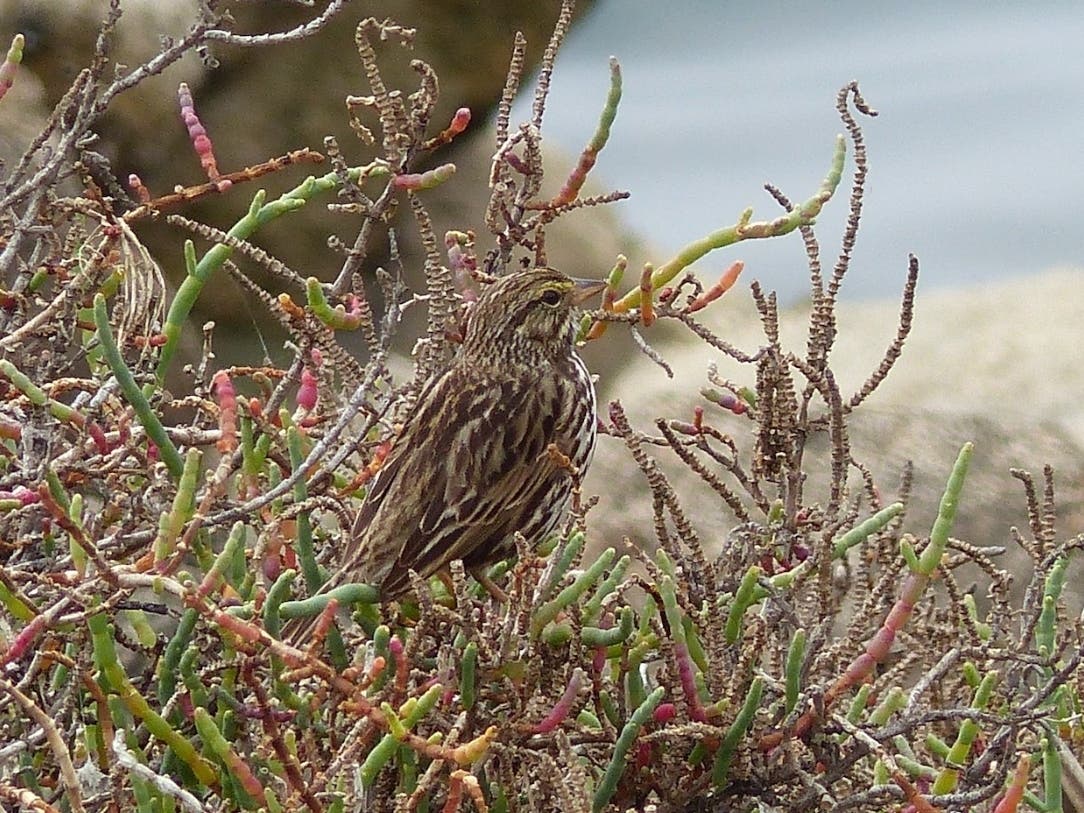
[Please scroll to the end for author's affiliations.] The Patch reports the Fire Department investigation found the source of the March 23rd brush fire in the Ballona Wetlands Ecological Reserve to be a homeless encampment in the area of origin. The fire was accelerated by strong winds. While the causes of these incidents are always concerning, there is another important part of the story: an ecological and historical one. Why did an intense brush fire burn at all in a wetland? After all, wetlands are supposed to be wet. The reason is that Ballona is different, thanks to a century of human interference that has altered the natural ecology, creating a cascade of increasing fire and endangered species risk. The manager of the Playa Vista Freshwater Marsh granted me access to the service road adjacent to the area of the March 23rd brush fire, where I took a few photos and inspected the burn. Above: The March 23rd Ballona Wetlands fire burned very hot, incinerating 5 acres of vegetation that should be moist and fire-resistant. Why? Historical Background Prior to around 1920, Ballona Creek hadn't yet been channelized to prevent adjacent lands from flooding. Winter storms scoured the creek's shoreline inlet deep and wide near Toes Beach. Ocean tides flowed freely into and out of the inlet and flooded low-lying wetlands as far landward as present-day Lincoln Blvd, and even further inland in a few places. The creek was eventually channelized part way to the shoreline to protect areas where agriculture and early oil production were underway. Above: In this 1921 photo, the channelized portion of Ballona Creek terminates about ½ mile short of the shoreline (green arrow). Tidal creeks (blue arrow) carried high king tides as far inland as the location of the March 23rd fire (red arrow), as well as draining rainfall runoff. By the time of this photo, the ocean tidal inlet had already been permanently opened with rock-armored jetties. The Ballona Creek channel was eventually extended to the sea in the 1940s. The Army Corps of Engineers dredged and concreted the channel and installed one-way flap gates to drain runoff out of the wetlands while preventing tidal flow back into them. This completely isolated Ballona's saltmarsh areas from the tides. The saltmarsh north of the creek was eventually dredged to create Marina Del Rey. The dredge spoils (water and sediment) were disposed on a marsh area south of Fiji Way, 15 feet thick in some areas. Thanks to advocacy from the non-profit group Friends of Ballona Wetlands, new mechanical tide gates installed in the channel banks in 2004 let some water back into the marsh area south of the channel. To prevent street flooding in lower Playa Del Rey during extra-high "king tides" which exceed the street elevations, the gates were adjusted to only partially let the tide in. Since the wetlands near Lincoln Boulevard are higher than the gates' adjusted elevation limit, the tides were never able to reach those distant marsh areas and they remained isolated (stranded). That's where the March 23rd fire occurred. Above: Mechanical tide gates in the southern Ballona Creek channel bank (red arrows) let some flood tides enter the Ballona Wetlands, but not enough to reach distant stranded marsh areas near Lincoln Boulevard. The California Department of Fish and Wildlife's restoration plan for Ballona includes removing these tide gates and the adjacent channel banks altogether, protecting lower Playa Del Rey instead with modern-design, vegetated levees (1). This design will reconnect all wetland areas in the ecological reserve to unrestricted ocean tides as was the condition a century ago. The plan will also deepen and widen the ancient inland tidal creeks that can still be seen today near Lincoln Boulevard. Pickleweed and other salt-tolerant wetland plants still tenuously survive in that area on fresh rainwater, rendered salty by the ancient estuarine soils. Above: The fire overran this ancient tidal creek channel. Once connected to the ocean, it no longer receives tidal flushing due to the mechanical gates in the Ballona Creek channel. Rainfall keeps the channel moist in winter and spring, just enough to resist the March 23rd fire. Stranded Pickleweed Pickleweed is the dominant saltmarsh plant in Ballona and other shallow tidal wetlands of southern California (2). It's a hardy, salt-tolerant species that evolved in our coastal wetlands and spreads lush mats wherever a high tide bathes flat land. Pickleweed seeds float in and out with the tides, so it continuously spreads and replants itself throughout the marshes in which it grows. Bright green throughout summer, pickleweed turns a rusty red in winter. Owing to the tides being restricted by those mechanical gates, the pickleweed marsh near Lincoln Boulevard where the March 23rd fire burned is highly stressed. No longer receiving an occasional ocean water bath, the woody pickleweed stems are dry and brittle, and the surrounding soil dries out except during the rainy season. Climate change amplifies this stress. In California, average annual temperatures increased steadily since 1895 with the rate of warming accelerating since the mid-1970s, according to the California Department of Water Resources. Extreme heat events have also increased in duration and frequency (3). A recent UCLA scientific study examined a salt marsh fire related to the 2013 Camarillo Springs Fire, similar to the March 23rd Ballona Wetlands burn. The study highlights a new, previously undocumented fire risk to our coastal pickleweed marshes (4). Above: The pickleweed (Salicornia pacifica), aptly named for its bumpy, pickle-shaped segments. This tough little lady unfortunately lost relatives in the March 23rd burn zone, seen a few feet in the distance. Note the dry weed stems surrounding her. Cascading Impacts to a Rare Bird Coexisting with pickleweed is the Belding's Savannah Sparrow (Passerculus sandwichensis beldingi), a small, gray songbird that depends on pickleweed for its entire life cycle (5). The Belding's nests, rears its young and forages for food exclusively in pickleweed, which also provides protective cover from predators. The Belding's Savannah Sparrow is one of only three officially listed endangered animals found in the Ballona Wetlands. The others are the El Segundo Blue Butterfly and another small bird, the Least Bell's Vireo. Neither of those two species are pickleweed-dependent. Above: The Belding's Savannah Sparrow, an endangered species totally dependent on pickleweed saltmarsh. Note how its cryptic coloration (camouflage) blends in with pickleweed. Photo by Patrick Tyrrell. Biologists haven't documented Belding's occupying the stranded pickleweed near Lincoln Boulevard where the fire occurred (6), but they likely did occupy it in the distant past before agricultural activity there and long before tidal flows were restricted. Over time, acre after acre of pickleweed at Ballona has been lost due to this slow, human-caused dehydration of the wetlands, aggravated by climate change. To make matters worse, these conditions invited windblown weed seeds to infest and further degrade the pickleweed stands. As we all know from the burrs in our socks, weedy plants grow quickly after winter rains and dry out just as quickly after flowering and going to seed, as spring rolls into summer. At Ballona, this habitat degradation has created a fire risk and gradually forced Belding's to use limited, more lush habitat nearer to the tide gates. Above: View northwest from the fire scar edge across weed-infested pickleweed marsh. Jefferson Boulevard is in the distance. Dry conditions caused by tidal stranding have allowed these tinder-dry, non-native weedy plants to invade the pickleweed marsh in the southeastern Ballona Wetlands. This is why a fire burned in the wetland. It was these dry weeds, and the dry stems of stressed pickleweed, that fueled the March 23rd brush fire. Had the fire started further upwind near Jefferson Boulevard on that windy day, the damage might have been far worse. Pickleweed nearer to the tide gates, where elevations are lower, seawater is plentiful and weeds cannot grow, would not burn in this way. Indeed, it would not likely catch fire in the first place. Above: Healthy, lush pickleweed at one of the tide gates, where flood tides bathe the plants daily. Marsh plants here are virtually fireproof and naturally devoid of weeds, which cannot tolerate the salty seawater. Above: The fire also burned "riparian" shrubs, such as willow, where another endangered bird, the Least Bell's Vireo, has been known to nest. Surveys are planned to document habitat recovery and return of this bird to the area. Help on the Way The figure below from the Department of Fish and Wildlife's Environmental Impact Report for the Ballona Wetlands Restoration Project, shows the restoration plan for the area where the March 23rd fire burned. Notice the blue tidal creek that extends all the way to nearly the point where the fire started. With the tide gates removed, this channel and others to be created or enhanced in the ecological reserve by the state project, promise to bring back the healthy, wet and weed-free pickleweed marsh that once existed in this part of Ballona. Within that future healthier pickleweed marsh no longer at risk of fires, the diminutive Belding's Savannah Sparrow will again be able to thrive as they had done for millennia. Above: The Fish and Wildlife restoration plan will enhance tidal channels (7) all the way east to the Freshwater Marsh. The plan also will allow fresh water to trickle into the saltmarsh there through two culverts (6 and 8), creating a fringe of valuable brackish marsh (pink) where the March 23rd fire burned. Enjoy your Ballona Wetlands! References: (1) Ballona Wetlands Restoration Project. Environmental Impact Report. State Clearinghouse No. 2012071090. https://nrm.dfg.ca.gov/FileHandler.ashx?DocumentID=149710&inline (2) Pickleweed. Aquarium of the Pacific. Online Learning Center. https://www.aquariumofpacific.org/onlinelearningcenter/species/pickleweed (3) Climate Change Basics. California Department of Water Resources. https://water.ca.gov/Water-Basics/Climate-Change-Basics (4) Lauren N. Brown, Jordan A. Rosencranz, Katherine S. Willis, Richard F. Ambrose & Glen M. MacDonald. 2020. Multiple Stressors Influence Salt Marsh Recovery after a Spring Fire at Mugu Lagoon, CA. Wetlands, volume 40, pages 757–769 (2020). (5) Richard Zembal and Susan M. Hoffman , 2010, A survey of the Belding's Savannah Sparrow (Passerculus sandwichensis beldingi) in California, 2010. For California Department of Fish and Game, Wildlife Branch by Clapper Rail Recovery Fund, Huntington Beach Wetlands Conservancy, P.O. Box 5903, Huntington Beach, CA 92615, September 2010. https://nrm.dfg.ca.gov/FileHandler.ashx?DocumentID=24503&inline (6) Edith M. Read, E.M. Read and Associates. Personal Communication. April 7, 2021. Author's note on affiliations: Dr. David W. Kay served on the Board of Directors of the non-profit Friends of Ballona Wetlands from 2007 until 2015, and served as Board President in 2012-13. He presently serves on the Board of Ballona Discovery Park in Playa Vista. David is a staunch advocate for the state of California's plans to restore the Ballona Wetlands Ecological Reserve. Since 1984, David has been employed by Southern California Edison Company, exclusively in the company's environmental services organizations. His many responsibilities included restoration of the 440-acre San Dieguito Wetlands near Del Mar. He is presently Senior Manager for Project Environmental Licensing at the company. David earned bachelor and masters degrees in biology and a doctorate in environmental science. See David's Patch Community Contributor profile here.
Discussion
By posting you agree to the Terms and Privacy Policy.